


The Waqrapukara archaeological complex is as beautiful as any of the other Inca constructions in Cusco. One of the factors that make Waqrapukara a unique tourist destination in Cusco, is the perfect combination of history and landscapes that this tourist destination has.
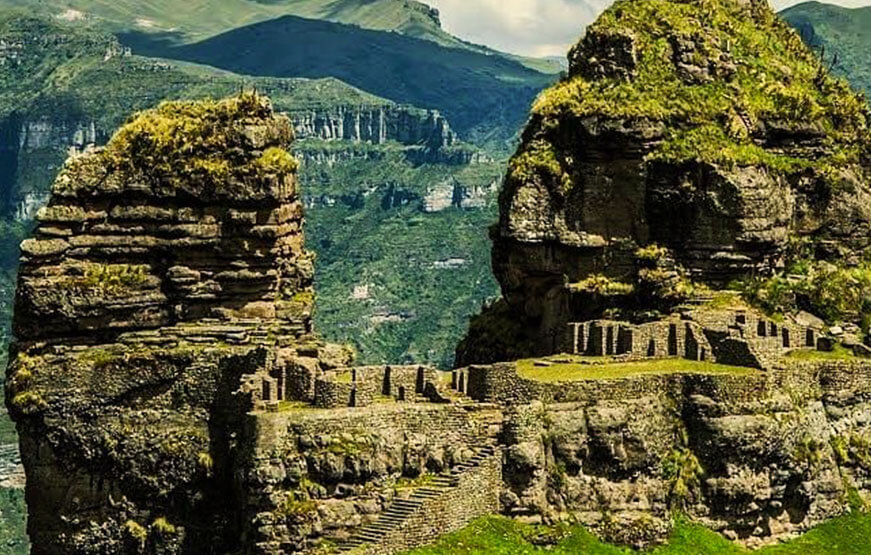
Its name comes from a Quechua word that means in Spanish: ‘Horn-shaped fortress’. The reason for this name is its immense summit with rocky mountain formations, as if they were two horns. This Inca site was promoted nationally and internationally from 2020.
Waqrapukara
Summary
Detailed information about Waqrapukara in Cusco
- Driving distance from Cusco: (96 Miles / 61 KM)
- Driving time: 6 hours round trip.
- Entrance price: for free
- Elevation of the beginning of the Trek: 3,710 meters / 12171 feet.
- Difficulty: Moderate to Challenging.
- Trail: Dirt and cobblestone trail from Santa Lucia.
- Hiking distance: 16 KM, round trip.
- Horse rental: It does not exist
- Hiking time: 5 hours round trip from the town of Santa Lucia.
- Maximum elevation: 4140 meters / 13582 feet.
- Tour duration: 12 hours.
- Elevation difference during the hike: 350 metres/1320 feet.
Where is it located?
Waqrapukara is located 3 hours from Cusco, in the province of Acomayo (south of the Cusco region). It belongs to the district of Acos. From a geographical point of view it is located in the mountain range of the eastern Andes, at the top of the Apurimac canyon. Its altitude reaches 4140 meters of altitude.
How to get to Waqrapukara?
There are three routes to get to Waqrapukara from the city of Cusco:
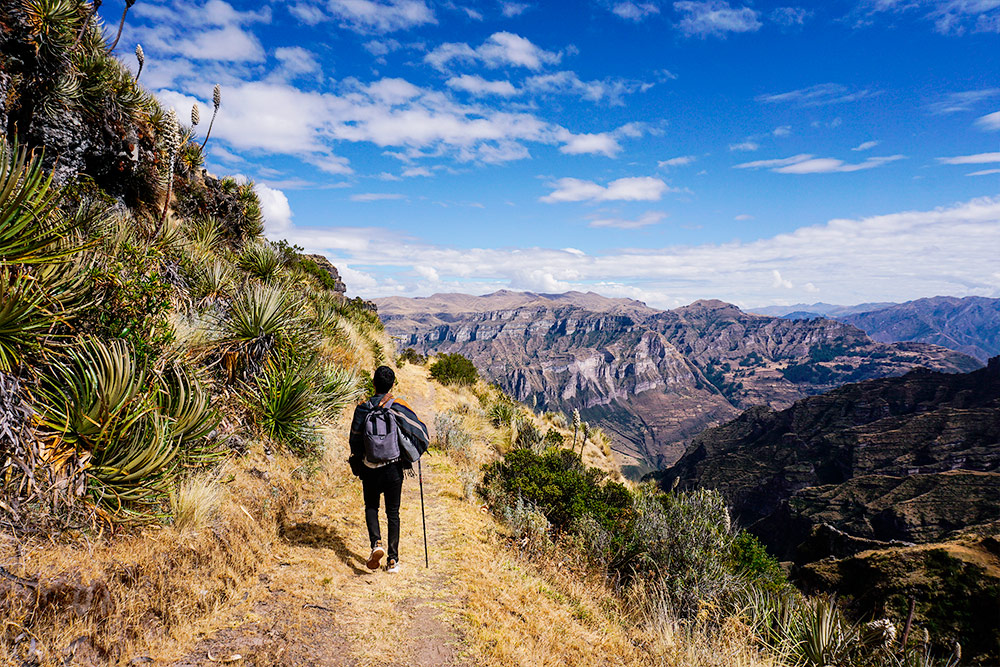
Route through Sangarará – This route is preferred by tourists and tourism agencies in Cusco. The trip by car starts from Cusco and ends in the town of Sangarará (2 hours 30 minute trip). Then there is a 15-kilometer round trip hike (between 3 to 4 hours) to Waqrapukara. The return path is the same.
Route through Huayqui – This is a 3-hour stretch from Cusco to the community of Huayqui. From here begins a walk for 7.5 kilometers round trip. This hiking route takes 3 hours round trip.
Route through Santa Lucía – This route also follows the southern route of Cusco until arriving at the rural community of Santa Lucía (approximately 3-hour trip). From there begins the 2-hour hike to Waqrapukara. A large part of these routes follow Inca trails and ancient pre-Hispanic trails.
Trail to Waqrapukara
What you need to know about this horn-shaped enclosure
During the Inca occupation, Waqrapukara was a religious sanctuary. Its fine constructions made with granite stone demonstrate it. However, due to its rock formation crowned by two huge horns, and because it is perched on top of a mountain, it is presumed that it must have also served as a fortress. Seen from afar, it resembles a formidable castle.
Archaeologist Miguel Colque Enríquez is in charge of the studies in Waqrapukara. Mentioned that the importance of Waqrapukara is still not entirely clear. Because there are several sections of Inca trails to get there. In addition, on the way there are other Inca sites such as Tambopukara, Yactapukara and Ayapukara. This could show that it was an Andean oracle of great importance.
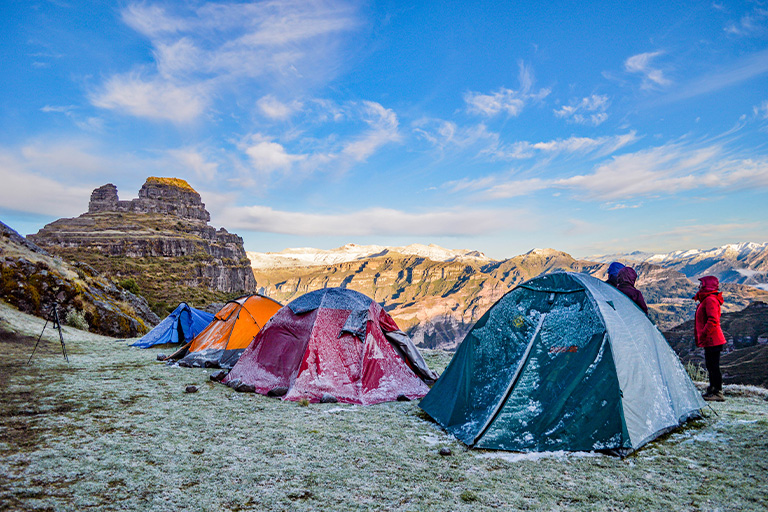
Waqrapukara is not yet very visited, on a day of maximum influx you will not find more than 20 people in the place. If you are encouraged to go, you will find an amazing place, made up of: experiential venues, temples, canals, platforms, stairways and more. In addition, you will have to take a walk full of beautiful landscapes. Most tourists go on a tour, although it is also possible to go on your own. You can also camp very close to Waqrapukara and watch a spectacular sunrise over the Apurimac canyon, one of the deepest on earth.
Waqrapukara History
Archaeological investigations and history show that Waqrapukara was initially built by the Canchis civilization. The Canchis inhabited the southern territories of Cusco (current province of Canchis) parallel to the Incas. Both civilizations competed for territorial control of that region. However, after the Inca war against the Chancas in 1400 AD, the Canchis allied themselves with the Incas and formed part of the Collasuyo region in the nascent Tahuantinsuyo empire.
Waqrapukara’s construction date is still a mystery. The canchis must have built the first roads and enclosures a couple of centuries before the formation of the Inca empire in 1438. It is estimated that under the government of Emperor Túpac Yupanqui (1471-1493) the main temples and platforms of the current religious enclosure were built.
The oral tradition of the Canchis nation brought to this day an Inca legend about Waqrapukara. This legend tells that the Inca general named T’ito Qosñipa had powerful armies in Canchis. The warrior rebelled against the Inca emperor Huayna Cápac who cornered the rebel in Waqrapukara. Despite this, T’ito Qosñipa resisted due to the good location of the place. To subdue him, Huayna Cápac ordered to cut off his water supply. Once the rebel surrendered, as punishment they mutilated one of his ears.
Constructions and Architecture
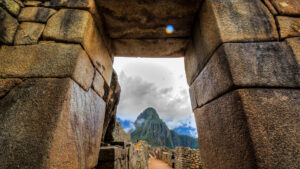
A notable aspect of the architecture of Waqrapukara are its sacred enclosures with three jambs located in the highest part of the sanctuary. These types of details in the Inca construction are present in few Inca sanctuaries of great importance such as Pachacamac (Lima) and Maukallacta (Espinar-Cusco).
The main structure of Waqrapukara (in the middle of the two horns) is made up of a cavern with a window that shows the abyss on which it is formed. The entire architectural complex of Waqrapukara is made up of enclosures, stairs, channels, platforms and more.
Tours to Waqrapukara
One day tours to Waqrapukara have a cost that ranges from 80 to 100 dollars. They include everything you need for a beautiful experience: private transportation, lunch, entrance fee, tour guide, and walking sticks. You can hire it through a web page or directly in Cusco.
Waqrapukara 2-day tours include a night camping next to the archaeological complex. Prices range from 160 to 200 dollars per person. Includes: private transportation, food (breakfast, lunch and dinner), entrance fee, tour guide and walking sticks.
Camping next to Waqrapukara
Can I go on my own?
The horn shrine is also a destination that can be visited on your own. To do this, you must take public transport to Cusipata (the cars leave from Huayruropata avenue in the city of Cusco). Once there you must take another public transport to the town of Sangarará. There begins the walk to the Inca archaeological site. This option is not highly recommended, since transportation to Sangarara is not very frequent.
More information
- The winds at the top of the sanctuary are intense in the afternoons. The temperature during the day can reach 23ºC. while at night the cold can drop to 0ºC.
- The hike that leads to the horn sanctuary follows ancient paths built by the Incas. Some researchers suggest that the route there was a pilgrimage.
- The best time to visit Waqrapukara is during the dry months from April to October. The rest of the year, especially January, February and March, the constant rains can prevent a comfortable hike to the sanctuary.

You might also like






Leave A Reply