


The Sacred Valley of the Inca is one of the most important tourist destinations in Peru and Cusco. The perfect complement to any visit to Machu Picchu.
This beautiful Peruvian sacred valley is home to beautiful traditional towns settled since pre-Columbian times. There the Incas built ancient citadels such as Pisac, Ollantaytambo and Chinchero. They also grew a great diversity of agricultural products on terraces such as Moray.
Today, all these places are very attractive tourist attractions for visitors. We recommend you do this tour in Cusco, before or after your visit to Machu Picchu.
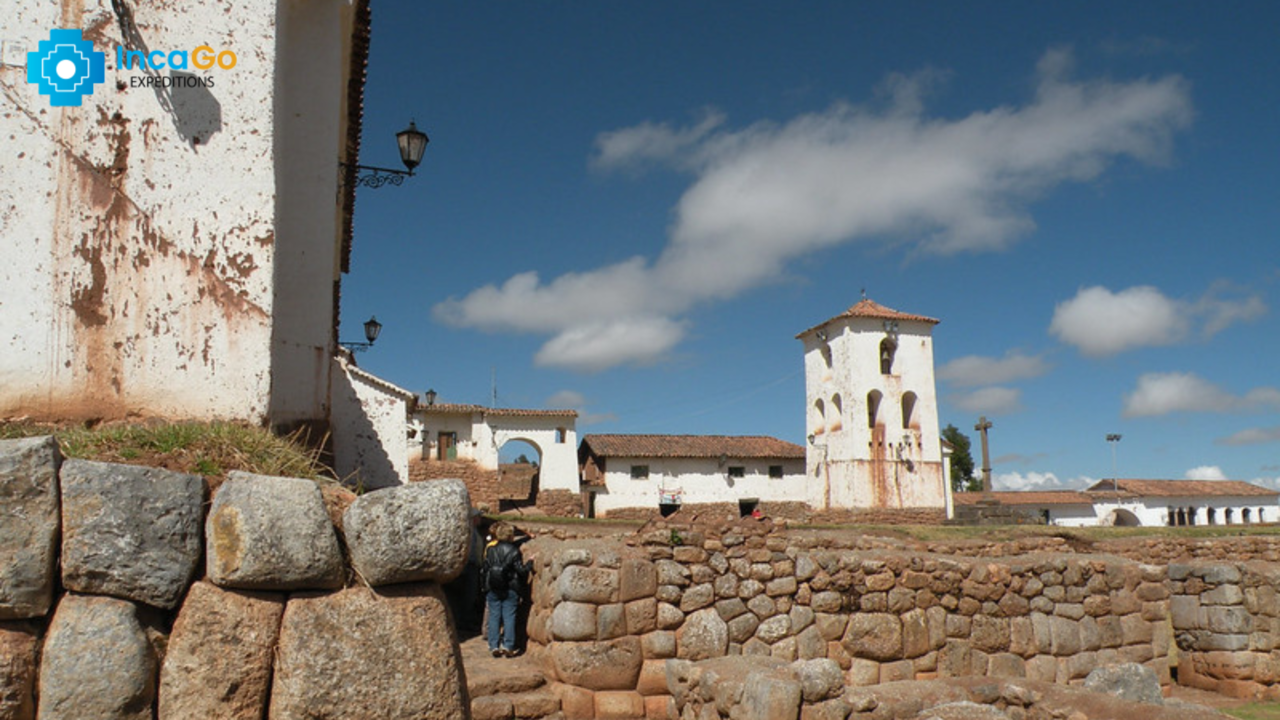
Chinchero
Summary
Where is the Sacred Valley of the Inca located?
The sacred valley of the Inca is a 76 kilometer corridor that begins in the town of San Salvador, passes through Pisac, Yucay, Calca, Urubamba, Ollantaytambo and ends surrounding the Inca citadel of Machu Picchu on 3 sides.
From Cusco it takes you only 1 hour to reach the sacred valley.
What is the Sacred Valley of the Incas like?
This valley was a sacred area for the Incas since it included an extensive territory that was very productive for agriculture.
The main products cultivated by the Incas were: corn, potatoes, olluco, quinoa and the coca leaf, considered a sacred plant. Today, agriculture continues to be one of the main activities of the residents of this Peruvian valley.
Due to the vast agricultural activity in the valley, the Incas decided to build their main temples and cities there.
The most important urban centers were Pisac, Yucay, Chinchero and Ollantaytambo. Even a little further into the jungle, emperor Pachacutec ordered the construction of a beautiful citadel that would serve as his resting place and limit with the jungle towns: Machu Picchu.
The Vilcanota River, currently known as the Urubamba River, runs through all the main towns in the valley. The Incas believed that this river was the representation of the Milky Way on earth.
The Salkantay and Verónica mountains (considered APUS or sacred spirits by the Incas) crown the beautiful landscape. Today, the river, the mountains and the land continue to be considered sacred by the inhabitants of Cusco who inhabit these lands. Many tourists come to the Sacred Valley to learn about its history and beauty.

Sacred valley
History of the Sacred Valley of the Incas
The Sacred Valley was inhabited by small Andean communities until the arrival of the Incas (mainly under the rule of Emperor Pachacutec from 1438 to 1471).
Then began a period of important construction of platforms, temples and administrative, political and religious cities such as: Ollantaytambo, Moray and even Machu Picchu.
During the Inca civil war between Huascar and Atahualpa (1529 – 1532), the inhabitants of the valley remained loyal to Huáscar’s army.
With the arrival and conquest of the Spanish, in 1536 the rebel Inca Manco Inca fled through the Sacred Valley of the Inca, burning Chinchero and settling in Ollantaytambo where he fiercely fought the invaders. Faced with his imminent fall, he settled in the inaccessible jungle and established his reign in Vilcabamba until 1572.
With the conquest, the fertile territories of the valley were distributed by the Spanish. The main temples were destroyed and Christian churches were built in their place.
Today many parts of the Inca archaeological sites are deteriorated, either due to time or damage caused by the Spanish.
Even so, the Sacred Valley of the Incas is a highly visited tourist destination. The residents preserve many of the ancestral traditions, even from Inca times.
Places to visit in this fertile Cusco valley
- San Salvador
- Pisac
- Lamay
- Calca
- Wayllabamba
- Urquillos
- Huayocari
- Yucay
- Urubamba
- Ollantaytambo
- Machu Picchu
- Maras
- Chinchero

Yucay
All the sports you can do in the Sacred Valley
ATV: One of the most popular adventure sports in the Sacred Valley of the Inca is the route that connects Chinchero, Maras and Moray by ATV. During the route, tourists will be able to visit the platforms of Moray and the Salineras de Maras.
Trekking: There are several hiking routes in the Cusco valley. Perhaps one of the most popular of all is the Inca Trail, a route that begins in a section of Ollantaytambo and ends in Machu Picchu, after 45 kilometers of pre-Hispanic path.
Rock climbing: The via ferrata or rock climbing is practiced in the Pachar sector in Urubamba. It uses ropes, staples, handrails and nails to provide security to the visitor during the ascent to a high rock. It is one of the most extreme sports that can be practiced in the Sacred Valley.
Zipline or zip line: Zip line is practiced in the Maras area, close to the famous salt mines. The circuit consists of 4 cables, the longest measuring 1250 meters. The tourist can travel the 4 cables or the one that seems most appropriate. At the top you can enjoy all the scenic beauty of the valley.
Canoeing: Canoeing takes place on the famous Vilcanota River, considered sacred by the Incas. The beginning of the adventure is located between the towns of Urubamba and Ollantaytambo. There are different levels, depending on the visitor’s experience. The canoeing tour takes between 1 to 2 hours.
Cycling: The starting point of the adventure is at the ‘Abra Málaga’, located 4,316 meters above sea level. From there you descend for several kilometers until you reach Ollantaytambo, located 2,792 meters above sea level. You can also cycle through the communities of Cruzpata, Chancadora and Maras.

Huaypo lagoon
How much does the trip to the Sacred Valley of the Incas cost?
The tour to the Sacred Valley of the Inca takes place in one day and costs approximately $70 per tourist. This tourist service includes transportation, entrance fees, professional guide and buffet lunch in Urubamba. It lasts approximately 10 hours (from 8 in the morning to 6 in the afternoon).
The tour of the sacred valley of the Inca can also be done on your own; For this it is necessary to buy the Cusco Tourist Ticket, the cost of which is 70 soles for foreigners and 40 soles for Peruvian tourists. This ticket allows entry to the archaeological sites of Pisac, Ollantaytambo, Chinchero and Moray.






Leave A Reply