


While thousands of tourists compete for limited spots to climb Huayna Picchu or Machu Picchu Mountain, there’s a third option that remains surprisingly unknown even to seasoned travelers: Huchuy Picchu. This small mountain, whose name in Quechua literally means «Little Mountain,» offers an accessible trekking experience, spectacular views, and the unique advantage of not requiring advance booking. This comprehensive guide will reveal why Huchuy Picchu deserves a place on your Peru travel itinerary.
Summary
What is Huchuy Picchu and Where is it Located?
Huchuy Picchu is the smallest and most accessible of the three trekking options available at Machu Picchu. It rises to approximately 2,497 meters above sea level, just 67 meters above the Inca citadel. This modest elevation gain makes it the perfect hike for those who want elevated views of the ruins without committing to strenuous climbs that require hours of effort.
The mountain is located on the north side of the archaeological complex, relatively close to the main entrance. This strategic location means you can easily incorporate the ascent of Huchuy Picchu into your regular visit to Machu Picchu without significantly altering your itinerary or adding extra hours to your day. The proximity also means you don’t need to get up extremely early to take advantage of this option.
Historically, Huchuy Picchu was part of the sacred landscape surrounding the citadel. The Incas considered all the surrounding mountains to be apus (protective mountain spirits), and while this minor peak doesn’t have the same elaborate ceremonial structures as Huayna Picchu, it likely served as an observation point and held spiritual significance within the Inca cosmological framework.

Huchuy Picchu, the small mountain that everyone ignores, offers spectacular views without the sacrifice of exhausting climbs.
The Big Advantage: No Advance Reservation Required
The most appealing feature of Huchuy Picchu is that you don’t need a special ticket or advance reservation to climb it. It’s automatically included in certain regular Machu Picchu circuits, specifically Circuit 4. This means you can decide to climb it on the same day as your visit, depending on how you feel, the weather, or simply your mood at the time.
This flexibility is invaluable compared to Huayna Picchu (which requires booking 3-4 months in advance and is constantly selling out) or Machu Picchu Mountain (which, although more readily available, still requires advance planning). With Huchuy Picchu, you eliminate the stress of securing limited tickets, the pressure of inflexible dates, and the anxiety of missing out on a unique opportunity if conditions aren’t optimal that day.
For travelers planning at short notice, families with unpredictable itineraries, or people who simply prefer flexibility in their plans, Huchuy Picchu is literally the only mountain trekking option in Machu Picchu that remains accessible. This accessibility makes it a well-kept secret that more tourists should know about and take advantage of.
Difficulty Level: Ideal for Beginners and Families
The ascent to Huchuy Picchu is rated as easy to moderate, accessible to virtually anyone with basic mobility. The hike takes approximately 30-45 minutes at a leisurely pace, significantly less demanding than the 1-2 hours required for other mountains. The descent takes 20-30 minutes, making the entire experience just 1-1.5 hours, including time at the summit.
The trail to Huchuy Picchu is well-maintained with stone steps on the steeper sections. There is no frightening exposure to precipices, no need to use your hands to scramble over rocks, and no technical sections that are scary or require special skills. It is essentially a standard mountain hike that any reasonably active person can comfortably complete.
For families traveling with children over 8 years old, Huchuy Picchu is perfect. Children can complete the climb without becoming overly exhausted; the short duration keeps their attention and interest, and the sense of accomplishment upon reaching a mountain summit is both educational and exciting. It’s an excellent way to introduce youngsters to mountain trekking in a controlled and safe environment. Older adults in good physical condition also find Machu Picchu perfectly manageable. It doesn’t require the extreme cardiovascular endurance of longer climbs, and the pace can be freely adjusted with frequent breaks and without the pressure of groups following you. For those with slight mobility limitations who still desire elevated views of Machu Picchu, this is the most realistic and rewarding option.
What You’ll See From the Summit of Huchuy Picchu
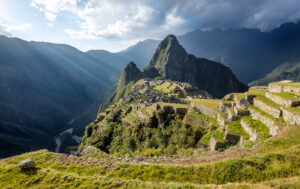
The views from the summit of Huchuy Picchu are surprisingly spectacular considering the minimal effort required to reach them. From this moderate elevation, you gain a high vantage point of Machu Picchu, allowing you to appreciate the citadel’s urban design, the division between agricultural and residential sectors, and the spatial organization that is invisible when walking among the ruins at ground level.
Huayna Picchu rises majestically directly in front of you from the summit of Huchuy Picchu, allowing you to photograph the iconic mountain with the citadel in the same frame. This specific perspective is unique: you can’t get it from the ground at Machu Picchu or from the other mountains. For photographers seeking original compositions without the effort of extreme treks, Huchuy Picchu offers exceptional opportunities.
The Urubamba River is visible winding through the deep valley, and on clear days you can make out the zigzagging road that climbs from Aguas Calientes to Machu Picchu. The perspective helps you understand the full geography of the area: how the citadel sits in a saddle between mountains, surrounded by natural cliffs that made it virtually inaccessible and defensible.
The summit of Huchuy Picchu also offers views to the east of the complex, revealing areas that are difficult to appreciate from other angles. You can observe how the agricultural terraces cascade down the slopes, how the drainage system distributes rainwater, and how each structure was strategically positioned in relation to the surrounding sacred mountains and the cardinal directions.

«The Little Mountain» proves that the best rewards do not always require the greatest efforts or the most complicated reservations.
Comparing Huchuy Picchu to Other Mountain Options
When you compare Huchuy Picchu directly to Huayna Picchu, the differences are dramatic. Huayna Picchu requires advance booking, has extremely limited capacity, demands excellent physical condition, includes intimidating technical sections with vertical ladders, and takes 2-3 hours to complete. In contrast, Huchuy Picchu does not require booking, is always available, is physically accessible, has no terrifying technical sections, and takes only 1-1.5 hours. Compared to Machu Picchu Mountain, Huchuy Picchu also presents clear advantages for certain travelers. The larger mountain requires 3-4 hours to complete, demands considerable cardiovascular endurance, reaches altitudes where the air is noticeably thinner, and while not technically challenging, is physically exhausting. Huchuy Picchu offers 60-70% of the views for only 25% of the effort, an attractive equation for many visitors.
However, it’s important to be realistic about Huchuy Picchu’s limitations. You won’t reach the same extreme heights or get the absolutely comprehensive panoramic views that the larger mountains offer. You won’t experience the same level of extreme adventure or have the same dramatic stories to tell. It’s a more moderate experience in every sense: less effort, less visual reward, but an exceptional effort-to-benefit ratio.
For travelers making the pragmatic decision of which mountain to climb, Huchuy Picchu is ideal if: you have limited time, you’re traveling with family or people of varying fitness levels, you couldn’t get tickets for other mountains, you want the flexibility to decide on the same day, or you simply prefer accessible experiences over extreme challenges. It’s the democratic option that makes mountain trekking in Machu Picchu accessible to everyone.
How to Access Huchuy Picchu During Your Visit
To climb Huchuy Picchu, you need to purchase the Machu Picchu ticket that includes Circuit 4. This specific circuit grants you access to the trail leading to the small mountain. When purchasing your ticket, verify that you specifically select Circuit 4, as other circuits do not include this option, even if their prices are similar.
The starting point of the trail to Huchuy Picchu is marked within the archaeological complex. Park rangers in the area can guide you if you have any questions about where to begin. Unlike Huayna Picchu and Machu Picchu Mountain, which have strict checkpoints with entry and exit registration, Huchuy Picchu has more relaxed controls, although you must still follow site rules and stay on marked trails.
There is no specific time restriction for starting the ascent to Huchuy Picchu within your assigned entry time to Machu Picchu. You can choose to climb at the beginning of your visit when you have the most energy, at the end after exploring the ruins when you have a better understanding of the context, or at any time in between, according to your preferences. This flexibility allows you to optimize your overall experience at the site.
Since Huchuy Picchu takes relatively little time, you can easily combine it with a full exploration of Machu Picchu within your 4-hour window. A popular strategy is to visit the main ruins first, understand the layout of the citadel, and then climb the mountain to appreciate everything you’ve just explored from above. This sequence creates a coherent learning experience that enriches your overall understanding of the site.
Best Time to Climb Huchuy Picchu
The dry season (April to October) offers the best conditions for climbing Huchuy Picchu. The skies are generally clearer, the chances of rain are minimal, and the trail is dry and safe. The views from the summit are optimal during these months, with visibility that can extend for tens of kilometers on particularly clear days. During the rainy season (November to March), Huchuy Picchu remains accessible, but with some additional considerations. The trail can be muddy and slippery, requiring footwear with excellent traction. Low clouds can obstruct views, especially during the middle of the day when the humidity condenses. However, the vegetation is greener and more lush, and there are fewer tourists, offering a more peaceful experience if you don’t mind the variable conditions.
Regarding the time of day, climbing Huchuy Picchu early in the morning (if you enter with the first shift) offers soft light perfect for photography and cooler temperatures. The morning clouds typical of the cloud forest can add dramatic atmosphere to your photos. However, these same clouds occasionally obscure views completely, especially between June and August. Mid-morning and midday shifts for Huchuy Picchu guarantee better visibility because the morning clouds have already dissipated. The sun is more intense, which can make the climb hotter, but ensures clear skies for panoramic views. For photographers who prioritize clarity over atmosphere, these times are ideal. Just remember to bring adequate sun protection because UV radiation is intense at this altitude.
Preparation and What to Bring for Huchuy Picchu
Although Huchuy Picchu is the most accessible hike to Machu Picchu, basic preparation is still necessary. Appropriate footwear is essential: hiking shoes with good grip or lightweight trekking boots work perfectly. Avoid sandals, dress shoes, or brand-new shoes that could cause blisters. The trail has sections of dirt and rock that can be wet even in the dry season.
Bring enough water (at least 1 liter) because even though the hike is short, you dehydrate quickly with the exertion and altitude. Light snacks such as energy bars, dried fruit, or chocolate will give you a quick energy boost if needed. You don’t need to carry a full meal like you would for longer treks, but something sweet for the summit enhances the experience.
Sun protection is critical: high-factor sunscreen, a hat or cap, and possibly sunglasses. UV radiation at 2,500 meters is significantly more intense than at sea level, and you will burn quickly without adequate protection. A light waterproof layer is wise even in the dry season, as mountain weather can change rapidly. Mentally, prepare yourself for moderate exercise. If you’re completely sedentary, even Huchuy Picchu will make you sweat and breathe heavily. However, you don’t need specific training: regular walking in your daily life is sufficient preparation. The key is to maintain a steady, comfortable pace, taking short breaks when needed without pushing yourself too hard.
Unique Advantages of Huchuy Picchu
A significant advantage of Huchuy Picchu is that it’s almost never crowded. While hundreds of people compete for space on the summits of other mountains, creating lines and pushing each other out of the picture, Huchuy Picchu receives a fraction of that traffic. You’ll often have the summit to yourself or share it with just a handful of other people, creating an intimate and personal experience.
For photographers, this solitude is invaluable. You can take the time to compose your shots without the pressure of tourists waiting their turn. You can experiment with different angles, wait for the perfect light, and capture images without unwanted people ruining your compositions. The creative flexibility that Huchuy Picchu offers partially compensates for its slightly less spectacular views compared to the larger mountains.
The educational experience for children is another advantage. Successfully completing Huchuy Picchu builds confidence in youngsters, teaching them that they can achieve moderate physical challenges. It’s a perfect introduction to mountain trekking that can inspire a love of the outdoors without overwhelming them with difficulties that lead to frustration or fear. Parents consistently report that their children remember climbing this mountain as a highlight of their family trip to Peru.
For older travelers or those recovering from minor injuries, Huchuy Picchu allows them to participate in the adventurous aspect of Machu Picchu without risking injury or extreme exhaustion. It maintains the dignity and autonomy of being able to «climb a mountain at Machu Picchu» without the potential humiliation of being unable to complete more demanding ascents. This inclusivity allows more people to have memorable experiences. 
Limitations and Realistic Expectations
It’s crucial to set realistic expectations about Huchuy Picchu. You won’t experience the same adrenaline rush of vertical ladders, you won’t get the absolutely panoramic 360-degree views, and you won’t get the same dramatic photos that appear in adventure magazines. It’s a genuinely good experience, but consciously moderated in every respect.
If your absolute priority is getting «the perfect shot» of Machu Picchu from the highest possible point, Huchuy Picchu will disappoint compared to the larger mountains. If you’re looking for an extreme physical challenge that tests your limits, this small mountain will seem too easy. If you want to show off epic mountaineering feats, recognize that Huchuy Picchu won’t impress knowledgeable audiences in the same way.
However, if you value accessible experiences, planning flexibility, family inclusivity, and an efficient effort-to-reward ratio, then Huchuy Picchu excels. It’s the smart choice for pragmatic travelers who want to enhance their Machu Picchu visit without committing to complicated logistics or extreme physical challenges. There’s merit in choosing the option that best suits your actual circumstances versus chasing ideals that don’t align with your reality.
Conclusion
Huchuy Picchu represents one of those rare travel opportunities where you reap disproportionate benefits to the effort invested. In a place where three million annual visitors compete for limited experiences, this small mountain remains surprisingly underutilized and undervalued. For savvy travelers who investigate beyond the obvious options, Huchuy Picchu is a hidden gem waiting to be discovered.
If your Machu Picchu visit includes Circuit 4, it would be almost negligent not to take advantage of the opportunity to climb this accessible mountain. The 30-45 minutes of moderate effort reward you with elevated views, unique perspectives, a sense of accomplishment, and memorable photographs that enrich your overall experience. It is literally the only mountain trekking option in all of Machu Picchu that does not require advance planning, making it the perfect alternative to maintain flexibility while enjoying authentic adventure at the most famous Inca wonder of the Peruvian Andes.





Leave A Reply