


Summary
What is Huayna Picchu and Why Climb It?
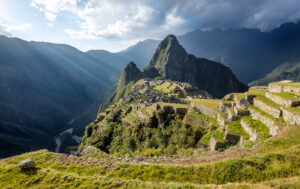
Huayna Picchu, whose Quechua name means «Young Mountain,» is the peak that rises 2,693 meters above sea level, approximately 360 meters above the citadel of Machu Picchu. It’s the pointed mountain that appears in the background of virtually every postcard photograph of the archaeological site, becoming an inseparable visual symbol of the Inca wonder.
Climbing Huayna Picchu completely transforms your perspective of Machu Picchu. From its summit, the citadel unfolds before your eyes like a three-dimensional map, allowing you to appreciate the complete urban design, the division between agricultural and residential sectors, and the perfect integration of the buildings with the surrounding mountain landscape. This panoramic view is simply impossible to obtain from any other point.
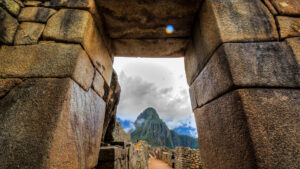
The experience goes far beyond the views. The ascent to Huayna Picchu takes you along original Inca paths carved into the rock, steep staircases that challenge your vertigo, and natural tunnels that cut through the mountain. Along the way, you’ll find small archaeological ruins, vertical agricultural terraces, and ceremonial structures that demonstrate this mountain was not just a viewpoint, but an integral part of the sacred complex.

Climbing Huayna Picchu is not just conquering a mountain, it is walking along sacred paths where the Incas conversed with the gods.
Difficulty and Requirements for Climbing Huayna Picchu
The hike to Huayna Picchu is classified as moderate to difficult, and this rating should not be taken lightly. The ascent takes approximately 1 to 1.5 hours depending on your fitness level and pace. Although the distance is not excessive (around 2 kilometers), the incline is steep, and the steps are steep, narrow, and uneven.
Many sections of the trail on Huayna Picchu have steps carved directly into the rock with uneven heights that can exceed 50 centimeters. Some sections are so narrow that only one person can fit at a time, creating bottlenecks where you must wait your turn to proceed. The exposure in certain areas can be intimidating for people with vertigo, with vertical drops just inches from the trail.
There are no official medical requirements for obtaining a Huayna Picchu permit, but you should honestly assess your health. This hike is NOT recommended if you have heart problems, severe respiratory issues, debilitating vertigo, serious knee problems, or if you are pregnant. The official minimum age is 12 years old, and while there is no maximum age limit, you will need to be in excellent physical condition regardless of your age.
The altitude adds a significant difficulty factor. Although Huayna Picchu is at a lower altitude than Cusco, the intense physical exertion combined with the altitude can cause rapid fatigue, shortness of breath, and dizziness if you are not properly acclimatized. It is recommended to spend at least two days in Cusco before attempting this climb to give your body time to adjust to the altitude.
How to Book Your Huayna Picchu Ticket
Tickets to climb Huayna Picchu are extremely limited and in high demand. Only 200 people per day are allowed to ascend, divided into two groups: Group 1 with entry between 7:00-8:00 AM (100 people) and Group 2 with entry between 9:00-10:00 AM (100 people). These slots frequently sell out 3-4 months in advance during peak season.
To book your Huayna Picchu ticket, you must visit the official website of the Peruvian Ministry of Culture or work with an authorized travel agency. The ticket automatically includes access to Machu Picchu via Circuit 4, which allows you to explore sections of the citadel before or after your ascent. You cannot purchase access to the mountain alone without including the archaeological site.
The price of the Huayna Picchu ticket varies depending on nationality and age. For adult foreigners, the cost is approximately 200 Peruvian soles (around $50-55 USD), significantly more expensive than standard Machu Picchu tickets. Reduced rates are available for students with a valid university ID, members of the Andean community, and children. Prices may change annually, so please check current rates at the time of booking.
It is absolutely critical that the information on your Huayna Picchu ticket exactly matches your passport. Any discrepancies in names, surnames, or ID number will result in denied entry without refund. Control at the mountain entrance is strict, verifying original documents from each visitor.

Each step carved in rock by Inca hands brings me closer to the summit where the sky embraces the earth.
The Ascent: What to Expect on the Trail to Huayna Picchu
The checkpoint to begin the ascent to Huayna Picchu is located within Machu Picchu, approximately a 20-minute walk from the main entrance. You must arrive well before your assigned time because entry is strictly enforced: if your group starts at 7:00 AM and you arrive at 7:30 AM, you’ve missed your chance. No exceptions.
The first 20-30 minutes of the ascent to Huayna Picchu are relatively easy, following a dirt and stone path that winds through the cloud forest. This section allows you to warm up your muscles and adjust your pace. The vegetation is dense, with orchids, giant ferns, and bromeliads hanging from the trees. It’s a fascinating ecosystem that deserves your attention even as you climb.
After this initial section, the Inca stairs begin in earnest. They are steep, uneven, and without handrails in most sections. In some places, you’ll find steel cables installed for safety, especially in the more exposed sections. Using these cables is optional but highly recommended, especially during the descent when your knees are fatigued.
About halfway up Huayna Picchu, you’ll find a small complex of Inca terraces and structures. This is a good place to take a break, catch your breath, and appreciate the already impressive partial views of Machu Picchu. Some groups stop here thinking it’s the summit, but the true summit is higher up, requiring another 30-40 minutes of climbing.
The final section to the summit of Huayna Picchu includes the most challenging and exposed stairs. There are stretches where the path is so narrow that you have to literally hug the rock face as you climb. The views into the void can be terrifying, but also exhilarating. This is the moment where your effort will truly be tested, but also where the adrenaline will propel you forward.
The Summit: The Reward for Effort on Huayna Picchu
Reaching the top of Huayna Picchu is a moment of absolute triumph. The summit area is relatively small, with limited space to sit and rest, but the views are unparalleled. Machu Picchu unfolds directly below like a perfect model, allowing you to identify every temple, every plaza, every sector you have visited or will visit at the archaeological site.
From the summit of Huayna Picchu, you can appreciate the magnitude of the Inca architectural achievement within its full geographical context. You see how the citadel sits in a saddle between two mountains, surrounded by sheer cliffs on three sides. You understand why this place was virtually impregnable and why the Spanish conquistadors never discovered it.
The views extend in every direction: the Urubamba River snaking through the valley thousands of meters below, Machu Picchu Mountain on the opposite side, the snow-capped peaks of the Vilcabamba mountain range on the horizon, and the cloud forest stretching endlessly. On clear days, visibility can reach over 100 kilometers, offering panoramas that defy description.
The summit of Huayna Picchu also contains small Inca ruins, including what was likely an observation post or ceremonial station. The precision with which these structures were built atop such a steep mountain is astonishing. Imagine carrying massive stones up the stairs you just climbed and fitting them together with characteristic Inca perfection.
Take your time at the summit. Most people stay for 20-40 minutes, resting, taking photos, eating snacks, and simply soaking up the experience. There’s no strict time limit as long as you’re reasonable. This is one of those moments you define as «this is why we travel,» so savor it fully before starting the descent.
The Descent: Just as Important as the Ascent

At the summit of Huayna Picchu I understand why only 200 people a day can experience this adventure that transforms tourists into conquerors.
Descending Huayna Picchu can be even more challenging than the climb. Gravity works against you, putting enormous pressure on your knees and quadriceps. The steep stairs you climbed now seem even more intimidating when you look down at them. Many people experience more fear during the descent because the exposure to the void is more visible.
Take the descent with extreme caution. Statistics show that most accidents on Huayna Picchu happen on the way down, not the way up. Go slowly, use the safety cables where available, and don’t hesitate to sit down certain sections if you feel unsafe. There’s no shame in prioritizing safety over speed or appearances.
Weak knees will suffer during the descent from Huayna Picchu. If you have pre-existing knee problems, consider wearing support bandages or knee braces. Trekking poles might help, but check if they’re allowed that day, as regulations change. Some people find that descending backward on the steeper sections reduces the strain on their knees. The complete descent of Huayna Picchu typically takes 45 minutes to 1 hour. Once back at the checkpoint, you’ll have completed approximately 2-2.5 hours of strenuous trekking. Your legs will be shaky, your clothes probably soaked with sweat, but your spirits will be high from the accomplishment. Now you have time to explore Machu Picchu with the unique perspective that only those who have climbed the mountain possess.
Huayna Picchu vs. Machu Picchu Mountain: Which to Choose?
A common question is whether to climb Huayna Picchu or the alternative Machu Picchu Mountain. Both offer spectacular views, but different experiences. Huayna Picchu is shorter, more technical, more dramatic, and more exclusive (only 200 people per day). It’s the iconic hike everyone knows and that appears in adventure publications.
Machu Picchu Mountain is longer (2-2.5 hours of ascent), less technical, less exposed, and has greater availability (800 people per day). It reaches a higher altitude (3,082 meters), offering even wider views, but from a greater distance. It’s less intimidating for people with moderate vertigo and is an excellent option if Huayna Picchu tickets are sold out.
For adventurers seeking adrenaline and exclusivity, Huayna Picchu is the obvious choice. For those who prioritize sweeping panoramic views and less technical hikes, Machu Picchu Mountain is superior. Some ambitious travelers with multiple days available choose to climb both peaks on separate visits, gaining comprehensive perspectives from every possible angle.
Essential Preparation for Climbing Huayna Picchu
Physical preparation is crucial. Weeks before your trip, incorporate cardiovascular exercises, leg training (squats, lunges, step-ups), and if possible, practice climbing stairs with a backpack. The best preparation is hiking similar mountains, but any leg exercise will significantly enhance your experience on Huayna Picchu.
Pack strategically for Huayna Picchu. You’ll need: water (1-2 liters minimum), energy snacks, sunscreen, insect repellent, a lightweight rain jacket, and possibly gloves for gripping rough rocks. Keep your backpack light but complete. Don’t underestimate how much you’ll sweat during the climb, especially on hot days.
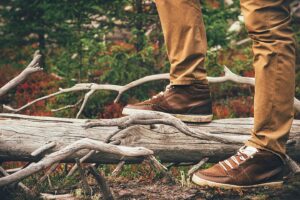
Footwear is critical for Huayna Picchu. You need shoes with excellent traction and ankle support. Trekking boots are ideal, but sneakers with good grip will work. The rocks can be wet and slippery, especially early in the morning or after rain. Inappropriate footwear dramatically increases your risk of falls.
Mentally, prepare for the challenge. Huayna Picchu will test your physical endurance and courage. There will be moments when you want to give up, when your legs scream for you to stop, when vertigo tries to paralyze you. Remember that thousands of people successfully complete this hike every year, including children and the elderly. If they could do it, so can you.
Photographer Tips for Huayna Picchu

Reaching the top is not the end of the journey; it’s the moment you understand that some experiences change your life forever.
The best photos from Huayna Picchu are obviously taken from the summit, but don’t overlook the opportunities during the ascent. Partial views of Machu Picchu from different altitudes offer unique compositions. The steep Inca staircases with the citadel in the background create dramatic images that capture the adventure of the climb.
Group 1 (7:00-8:00 AM) offers the best light for photography. The morning sun illuminates the citadel from the side, creating shadows that define the architecture. Fog may be present, creating a mystical atmosphere, though it can also obstruct views. Group 2 (9:00-10:00 AM) has more direct, flatter light, less favorable for photography but with a higher probability of clear skies. Bring a lightweight camera. Heavy photographic equipment becomes a burden during the steep ascent of Huayna Picchu. Many professional photographers opt for compact mirrorless cameras for this trek. Secure your camera with a neck or wrist strap because falls from certain exposed sections mean permanent loss of equipment.
Conclusion: The Adventure That Defines Your Visit
Climbing Huayna Picchu transforms your visit to Machu Picchu from touristy to epic. It’s physically demanding, requires advance planning, and has additional costs, but the experience is unparalleled. The views from the summit, the satisfaction of accomplishment, and the stories you’ll tell for years to come completely justify the effort.
If your physical condition allows it, if you can book well in advance, and if the challenge excites you rather than frightens you, don’t hesitate to add Huayna Picchu to your itinerary. It’s the difference between visiting Machu Picchu and conquering Machu Picchu, between observing the Inca wonder and becoming part of its legend for a day. The ancient Inca trails to the summit await you, ready to reveal perspectives that will forever change how you understand this sacred citadel suspended among mountains in the heart of the Peruvian Andes.



Leave A Reply