


The Inca Trail to Machu Picchu is much more than an ancient route: it’s a transformative experience that combines history, nature, and adventure. For those looking to purchase an all-inclusive Inca Trail package, knowing the official Inca Trail camps is key to understanding what this journey is like day by day. Each camp marks a fundamental stage of the trek and holds fascinating stories of the Inca Empire, as well as unique landscapes in the Peruvian Andes.
Choosing a 4-day Inca Trail tour means hiking ancient Inca trails, crossing mountain passes, and sleeping in authorized camps, surrounded by sacred mountains, cloud forests, and starry skies. Below, we present the main camps on the Inca Trail, their historical significance, and interesting facts that will make you want to experience this unforgettable trek.
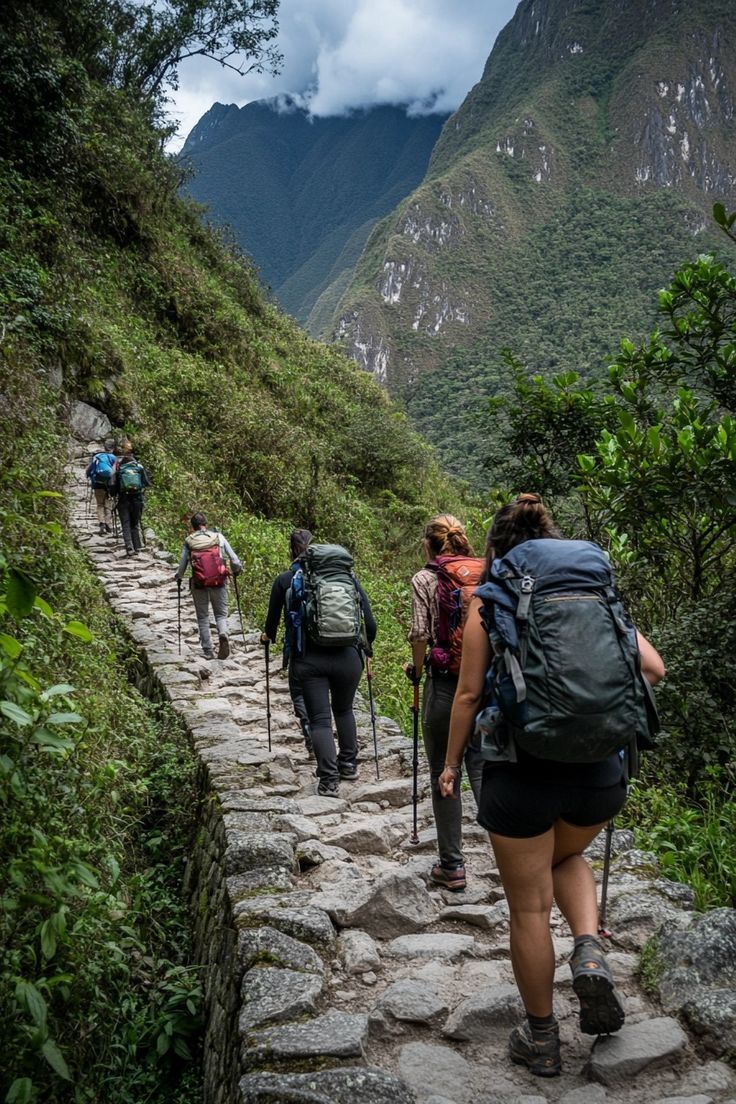
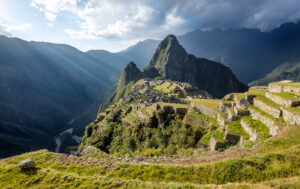
Inca Trail to Machu Picchu.
-
Summary
Wayllabamba – The Start of the Andean Challenge
Altitude: 3,000 m
Wayllabamba is the first campsite on the Inca Trail, located in a traditional Andean community where time seems to have stood still. Its name in Quechua means “pasture plain,” and during the Inca era, it was a strategic agricultural area.
Here, travelers begin to acclimatize to the altitude before tackling the more demanding sections of the trek. It is common to see llamas and alpacas grazing, as well as fields cultivated using ancestral techniques.
Interesting fact: From this point, you get a privileged view of Nevado Veronica, a mountain considered sacred by the Incas.
-
Ayapata (Llulluchapampa) – Trail to Dead Woman’s Pass
Altitude: 3,300 – 3,800 m
Ayapata, also known as Llulluchapampa, is one of the most important campsites on the Inca Trail. It lies before the famous Warmiwañusca Pass, the highest point on the route. Here, the trek becomes more challenging, but also more spectacular.
The landscape changes dramatically: ichu grass forests, wild orchids, and Andean hummingbirds appear. The Incas used this area as a resting point before crossing the mountain pass.
Interesting fact: The name Llullucha comes from an Andean plant that was used as an energy food.
-
Pacaymayo – Rest Stop in the Sacred Valley
Altitude: 3,600 m
Pacaymayo means “hidden river” in Quechua. This campsite is located in a deep valley surrounded by imposing mountains, offering one of the most restorative rest stops on the Inca Trail trek.
Historically, it was a strategic point for controlling secondary routes of the Inca Empire. Today, it is one of the most peaceful and photogenic campsites.
Importance: From here, you can access archaeological sites such as Runkurakay, which reinforces the cultural value of the trek.
-
Phuyupatamarca – The Camp Above the Clouds
Altitude: 3,650 m
Phuyupatamarca translates as “place above the clouds” and is one of the most impressive campsites on the Inca Trail. On clear days, the views extend into the high jungle, while the mist creates a mystical atmosphere.
This archaeological complex served a ceremonial, administrative, and resting function for travelers of the Inca Empire. Its structures include stone enclosures, plazas, agricultural terraces, and a sophisticated hydraulic system comprised of more than a dozen water fountains, still in operation. For the Incas, water held profound spiritual significance, so Phuyupatamarca was considered a space for purification and connection with nature.
One of the most fascinating aspects of this archaeological site is its design in harmony with the environment. The constructions follow the natural topography of the mountain, demonstrating the advanced knowledge of Inca engineering and architecture. Furthermore, its proximity to other important sites such as Intipata and Wiñay Wayna reinforces its key role within the Inca Trail network.
Interesting fact: The Incas designed an advanced hydraulic system to harness rainwater.
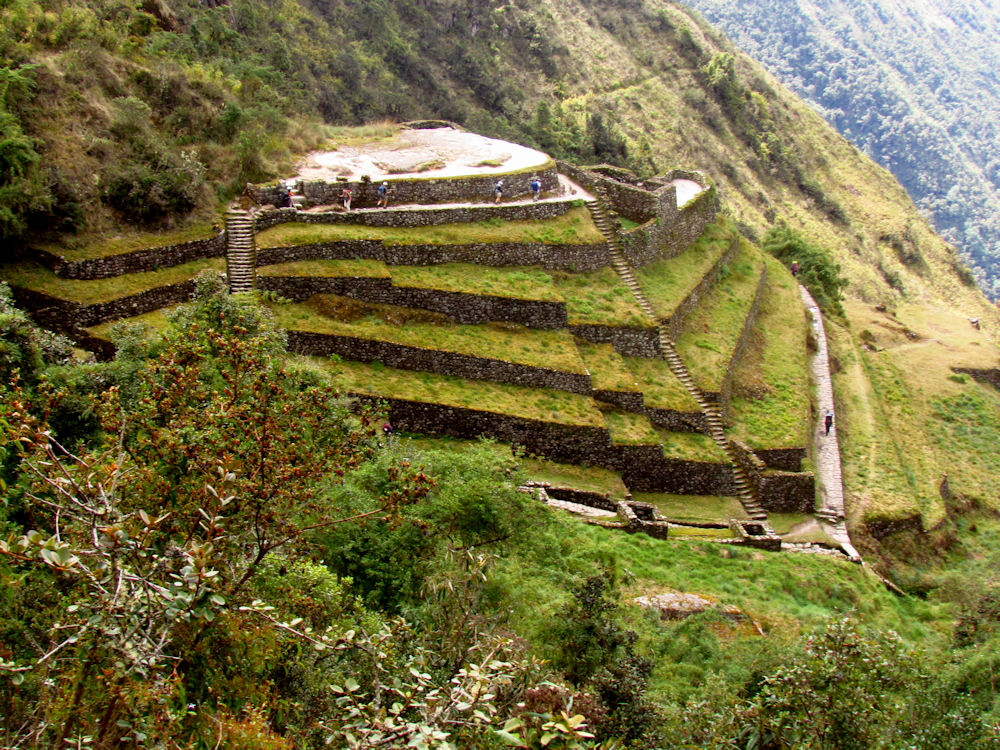
Phuyupatamarca, the most scenic campsite on the Inca Trail.
-
Wiñay Wayna – The Gateway to Machu Picchu
Altitude: 2,650 m
Wiñay Wayna means “forever young” and is the closest campsite to Machu Picchu. Surrounded by agricultural terraces and orchids, this site was an important center of agricultural production to supply the citadel.
This site served an agricultural, ceremonial, and residential function, primarily intended to supply and house those traveling to Machu Picchu. Its impressive stepped terraces demonstrate the advanced Inca knowledge of mountain agriculture, allowing cultivation on steep slopes and ensuring year-round food production. Wiñay Wayna also features finely carved stone enclosures and a hydraulic system that distributes water through channels and ceremonial fountains.
One of the highlights of Wiñay Wayna is its strategic location, as it was one of the last resting points before entering Machu Picchu. For the Incas, this place represented a spiritual transition to the sacred city. Today, it is one of the most exciting sites on the Inca Trail, as travelers spend their last night here before reaching Inti Punku and witnessing Machu Picchu at sunrise. Visiting Wiñay Wayna allows you to understand the grandeur of the Inca Empire and its profound connection with nature.
Interesting fact: It is one of the sites with the greatest diversity of flora on the Inca Trail.
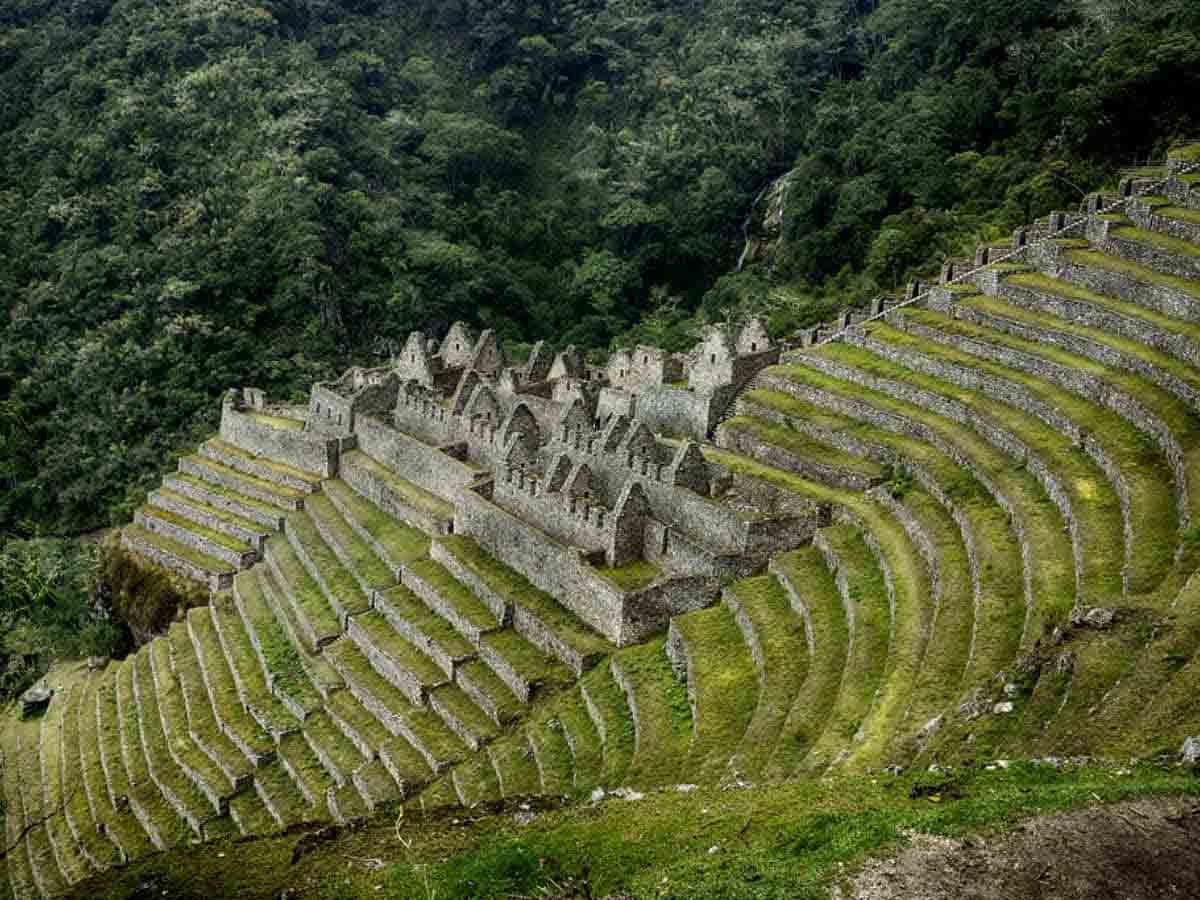
Wiñay Wayna, the sacred anteroom of Machu Picchu.
Why Choose the Inca Trail with IncaGo Expeditions?
Booking the Inca Trail with us guarantees official campsites, professional guides, and a safe experience. Each stage of the trek is carefully planned so you can enjoy the journey worry-free.
If you dream of hiking the Inca Trail to Machu Picchu, sleeping under the stars, and connecting with the living history of Peru, now is the time.





Leave A Reply