


On your trip to some Andean country, especially Peru and Machu Picchu, you will hear or read the word «Apus» or «Pachamama». In Inca belief, APU was the name given to the sacred spirit of a mountain, a highly revered Andean deity. At present, the people of the Peruvian Andes continue to venerate these Inca gods, as entities in charge of agricultural prosperity and the correct distribution of water.
Summary
What Are The ‘Apus’?
- ‘Apu’ is a Quechua word meaning «sacred spirit». The Incas used the term to refer to mountains and snow-capped peaks of great importance.
- The «Apus» were protective spirits and watched over the people in their territory, their livestock and their crops.
- The «Apus» are deities that can offend and annoy and at the same time punish the beings that are within their domain.
- According to the worldview of the Andean man (before, during and after the Incas), the mountains were divine entities that governed the destiny of human beings.
- For the Andean man, each mountain has its own spirit, its own name and its own domain which they protect. Thus, each region has its own ‘Apu’ or protective mountain.

Apus and Alpacas
What Mountains Were Considered Apus?
The Andes mountain range occupies the western part of South America, bordering its entire coast in the Pacific Ocean. It has a length of 8,500 kilometers, making it the longest continental mountain range on Earth. From its northern end, in western Venezuela, it crosses Colombia and Ecuador; in the center of South America it crosses Peru and Bolivia; in the south, it serves as a natural border between Chile and Argentina, and has its southern end in Tierra del Fuego.
Only in the Peruvian Andes there are more than 3,000 snow-capped mountains and more than 9,000 non-snow-capped mountains; not all of these mountains were considered Apus. For a mountain to be considered a tutelary spirit, it must possess the following characteristics.
- The highest snow-capped mountains in a geographical region: some examples of these would be the snow-capped Aconcagua, the highest in the Andes, and the snow-capped Ausangate, the highest snow-capped peak in Cusco.
- Mountains that contain large amounts of minerals, such as Apu Potosi in Bolivia, a mountain that contained large amounts of silver. This mountain was exploited by the Spanish invaders between 1545 and 1625.
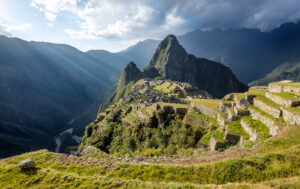
- Apus were considered, all the mountains that had a water source or hills that for meteorological reasons were natural markers of rainfall in a region. A clear example of this type of deities is the Machu Picchu mountain.
- Finally, Apus were considered, the mountains that had a unique and imposing scenic beauty such as the case of Apu Vinincunca, better known as the rainbow mountain.

Apu Ausangate
How are the Apus venerated today?
Today people in the Andes of Peru, Bolivia, Chile and northwestern Argentina perform the Kintu; it refers to a group or bunch of coca leaves selected and used ritually to make an offering or a pukuy (Andean prayer). Offerings with kintus can be directed to nature as thanks and especially to the spirits of the mountains.
How were the Apus venerated in Inca times?
- The people of the Incanato usually worshiped the ‘Apus’ with chicha (corn beer), llama tallow and coca leaves.
- Scientific evidence has been found that in times of natural disasters such as: floods caused by the EL NIÑO phenomenon, droughts, earthquakes or volcanic eruptions, the Incas performed human sacrifices. This ceremony called Capacocha was performed to calm the fury of the Apus.
- One of the most important discoveries in Peru was the finding of the ‘Juanita Mummy’ (also known as the ‘Lady of Ampato’). The body of this girl was found in 1995 at the top of the snowy Ampato.
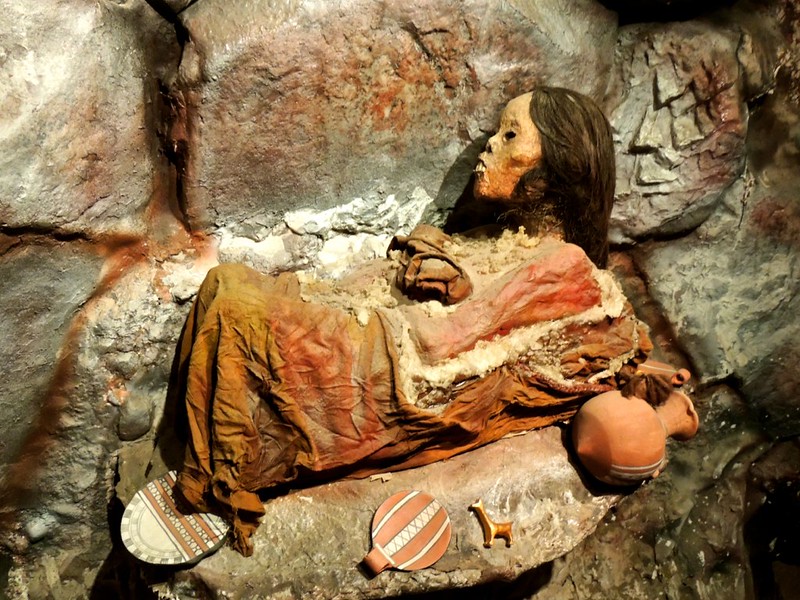
Juanita Mummy
These are the most important ‘Apus’ of the Incas in Cusco:
- Ausangate.
- Salkantay.
- Veronica.
- Colque Cruz.
- Pitusiray Sawasiray
In other regions of Peru:
Sara Sara (Ayacucho).
Coropuna (Arequipa).
Ampato (Arequipa).
Misti (Arequipa).
Chachani (Arequipa).
Huarancante (Arequipa).
Hualca Hualca (Arequipa).
Allincapac (Puno).
Ccarhuarazo (Ayacucho).
Rasuwillka (Ayacucho).
In Chile:
Paniri (Antofagasta).
Licancabur (Antofagasta).
Copiapo (Atacama).
The Lead (Santiago de Chile).
In Argentina:
Chani (Jujuy).
Quehuar (Salta).
Aconcagua (Mendoza).
Chuscha (Salta).
What Apus can be observed in the visit to Machu Picchu?
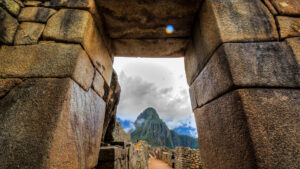
The Inca citadel of Machu Picchu is surrounded by a sacred landscape, from the point of view of the Inca and Andean worldview. Due to its location it is found inside the Pachamama and surrounded in 360 degrees by tutelary Apus. Between them we have:
- Apu Machu Picchu.
- Apu Huayna Picchu.
- Apu Yanantin.
- Apu Putukusi.
- Apu Wiscachani.
- Apu Pumasillo.
- Apu Veronica.
- Apu Salkantay.

Yanantin Mountain
Many Andean and spiritual people from all over the world currently make use of the ancestral ceremony of the Wachuma to come into contact with the sacred spirits of the Pachamama and the Apus; two widely respected Andean deities in the Peruvian Andes.





Leave A Reply