


The Inca civilization used various types of plants and concoctions in a ceremonial and spiritual way that are now known worldwide. These sacred plants of the Incas are helping many people around the planet to heal and connect physically, emotionally and spiritually. The Inca priests used to enter a spiritual trance to pay homage and venerate their gods, which were 100% of nature. Among the most important were the sacred rituals for the sun, the moon, the sacred mountains (APUS) and mother earth (PACHAMAMA).
Summary
3 sacred plants of the Incas
The Incas and all the Andean civilizations that preceded it used various plants and sacred concoctions for their ancestral ceremonies and rituals; However, in this article we will mention the 3 sacred plants of the Incas that have acquired the greatest worldwide relevance.

Ayahuasca vine
-
Ayahuasca
Ayahuasca or yagé is an indigenous drink used in traditional South American medicine by native peoples of Bolivia, Brazil, Colombia, Ecuador, Peru and Venezuela.
It is a decoction made from the combination of:
Banisteriopsis caapi (yagé or ayahuasca), which contains harmine and tetrahydroharmine (THH), alkaloids of the beta-carboline class, which act as monoamine oxidase inhibitors (MAOIs) and allow the primary psychoactive component dimethyltryptamine (DMT) to enter into activity, and
a second plant that is the one that contains the DMT molecule itself, especially Psychotria viridis (chacruna) or also Diplopterys cabrerana (chagropanga or chaliponga)
The ayahuasca preparation receives different names depending on the different towns or regions where it is made.
Medical applications of ayahuasca
Ayahuasca is used in Peru -whose government has recognized it as ‘one of the basic pillars of the identity of the Amazonian peoples’- to treat addiction to drugs, medications or alcohol, due to its ability to reduce anxiety and fear and balance the nervous system. In addition, it is considered a powerful relaxant and has been used in the treatment of depression and post-traumatic stress with satisfactory results.
An example of this is a study in which the Spanish Jordi Riba, doctor of pharmacology and head of the Neuropsychopharmacology group at the Hospital de Sant Pau Research Institute, has collaborated, and which has been published in the Brazilian Journal of Psychiatry. In this research, ayahuasca was administered to patients who suffered from depression and who had not responded to conventional treatment, and who, after a single dose of the drink, and a few hours after its intake, showed a significant improvement that was maintained for three weeks.

San Pedro or Wachuma cactus
-
Wachuma
Another of the sacred plants of the Incas used mainly in the Andes is the Wachuma, also known as San Pedro, since due to its entheogenic properties it has the keys to enter heaven.
Echinopsis peruviana, also called Trichocereus peruvianus, is a fast-growing shrubby cactus, native to the western slopes of the Andes in Peru, found at an altitude of between 2,000 to 3,000 meters.
Economic and cultural importance
This species of cactus is one of the sacred plants of the Incas and has been used by humans for several millennia. The oldest find was located in the Cueva del Guitarrero, in the Ancash region of Peru. In this cave, inhabited continuously since the year 8600 a. C., a high concentration of T. peruvianus pollen from the oldest phase of human occupation has been detected, as well as some cactus fragments, which would testify to the intentional introduction of this plant inside the cave.
What is the wachuma for?
Andean masters use it to perform gastro-intestinal healing, to purge the body, cleanse the stomach, to open consciousness, expand roots and connect with the different energy planes.
Andean teachers or healers use wachuma for its hallucinogenic properties, since it has entheogens. It is also used for the creation of cosmetics.
What are entheogens?
It is a vegetable substance or preparation of vegetable substances with psychotropic properties, which when ingested, causes a modified state of consciousness when used in a religious, ritualistic or spiritual context.
What are the uses of the San Pedro cactus?
This traditional indigenous medicine is used for some therapies, archaeological studies of its use have been found that go back 2000 years.
This cactus has recreational, hygienic, and medical uses, it is also used in spiritual rites, since it has entheogenic properties, due to the large amount of alkaloids and mescaline.

Coca leaf
-
The sacred coca leaf – One of the most emblematic sacred plants of the Incas
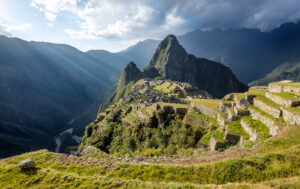
Your trip to Machu Picchu will give you the opportunity to learn more about the sacred plants of the Incas. This plant was used in religious ceremonies. Today, this sacred leaf is marketed in Cusco and other Andean cities in its natural presentation as well as in infusions, extracts, creams, candies, and even chocolates, liqueurs, and capsules.
What is the coca leaf?
The coca leaf is a plant native to South America, especially in the subtropical regions of the Andes.
The scientific name of this plant is ‘Erythoroxylium coca’. It is approximately 2.5 meters tall. It has white flowers and ovoid leaves.
There are records of the use of this leaf in pre-Inca cultures up to 8 thousand years before our era. The Incas used it for its anesthetic properties that helped fight fatigue and stress.
The coca leaf and the Incas
The Incas inherited the consumption of coca leaf by the cultures that already cultivated and consumed this plant.
The coca leaf was one of the sacred plants of the Incas. However, it could only be consumed by the Inca nobility.
The only exceptions were the chasquis (people who ran through the mountains transmitting the message of the Incas), the children who would be sacrificed in the capacocha ritual or in exceptional cases of famine in the population.
After the fall of the Inca empire, the population took over the consumption of coca leaf. The Spanish considered it a diabolical plant but could not disappear its consumption.
Coca leaves are still chewed by the Aymara and Quechua cultures of Peru, Bolivia, and other Andean countries.
Inca ceremonies with coca leaf
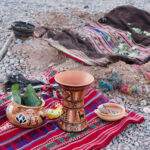
The Inca ceremonies for payment to the land included the use of coca leaves. These were offered to the land that supplied the world with different agricultural products.
Due to the sacredness of the coca leaf, it was held reverently following a strict ritual that, in some cases, is still practiced today.
This ritual consisted of holding three coca leaves, joining them with two hands and offering them at a high altitude.
Then we proceed to blow the leaves as a sign of respect to the gods of nature such as the sun, the moon, the mountains.
(APUS) and mother earth (PACHAMAMA).
Only after performing this ceremony, the Incas proceeded to introduce the coca leaf into their mouths.
At all times, the person shows a solemn attitude and respect for this sacred ceremony.
The coca leaf in Cusco today
In Cusco, peasants, miners, ranchers and other people consume coca leaves. This helps them reduce the feeling of tiredness and hunger. In addition to providing them with strength and resistance; helping them endure long hours of heavy work.
However, of the total coca leaf production, most of it is destined for the manufacture of cocaine. Peru is one of the main cocaine exporters in the world.
During the mystical tourism tours of Cusco, the coca leaf is used. For example, in the Inca ceremonies of payment to the earth or ayahuasca, this plant is usually used.
During the trekking trails to Machu Picchu, coca leaves are used to reduce the symptoms of altitude sickness or fatigue. The most popular routes are the Inca Trail and the Salkantay Trek.





Leave A Reply