


The lost city of the Incas is a construction with an antiquity of 600 years, within the guided tour you can visit fascinating shrines of Machu Picchu aligned with specific phenomena of the sun such as the solstices and equinicces, as well as shrines for the moon, mother earth and the mountains. However, currently due to the restrictions of circuits and visiting hours to the Inca citadel, it is no longer possible to visit all the shrines and temples in a single tour of Machu Picchu.
In this article we detail in which circuits and at what times you will have access to visit the most important shrines of the Incas in Machu Picchu.
Summary
Shrines of Machu Picchu in circuit 1 and 2 (Ticket called, Llacta Machu Picchu)
These two circuits, also called, Llacta Machu Picchu in the official sales system of the Cusco Ministry of Culture, allow you to access the upper part of the Inca citadel and thus obtain the long-awaited postcard photo of Machu Picchu with Huayna Picchu as a backdrop.
The shrines of Machu Picchu are described according to the order in which they are visited on a guided tour.
The main bench of Machu Picchu
This shrine is located to the north of the set of buildings, at the foot of the highest part, in the Main Plaza or Religious Sector of Machu Picchu. This temple is called “the altar”.
In the inner part of the temple there is a kind of ceremonial altar or granite rock chair pointing towards the mountain of Machu Picchu (place where there is a water spring used by the Incas to provide water to the Inca citadel). The walls surrounding the altar have cupboards where the Incas placed offerings, figurines and gold and silver statues.
The main wall of this altar has suffered structural damage basically caused by seismic movements in Machu Picchu and the large amount of rain that falls between November and March.
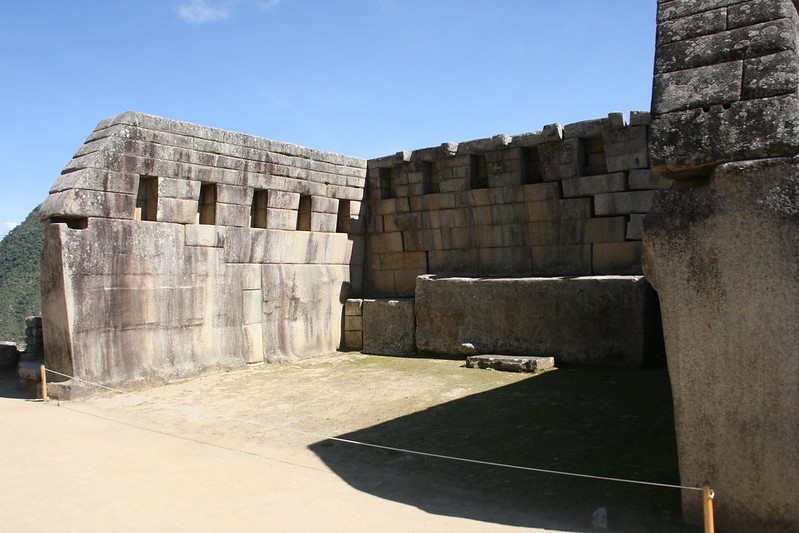
Main altar or sacred bench
The shrine of the 3 windows
It is an enclosure that is located in the very heart of the urban sector and is part of the Main Square or Sacred Square of Machu Picchu, its construction is a wonderful Inca masonry work through the union of stones without mud mortar, using the technique of tongue and groove in stone and achieving a perfect fit in the stones. The pillar located in its central part is aligned with the shortest day of the year in the southern hemisphere and the three windows, through projections of light and shadows, mark the longest day of the year; both events are known as the winter solstice and the summer solstice.

The temple of the 3 windows
The compass of the Inca
A stone that is found on the side of the main altar of Machu Picchu exactly reproduces the rhomboid shape of the Southern Cross, and whose longest «arm» is oriented exactly magnetically on the North axis – South. It has the shape of the southern cross, one of the most important constellations in the southern hemisphere. However, this rhomboid stone also marks the alignments of solstices in Machu Picchu.
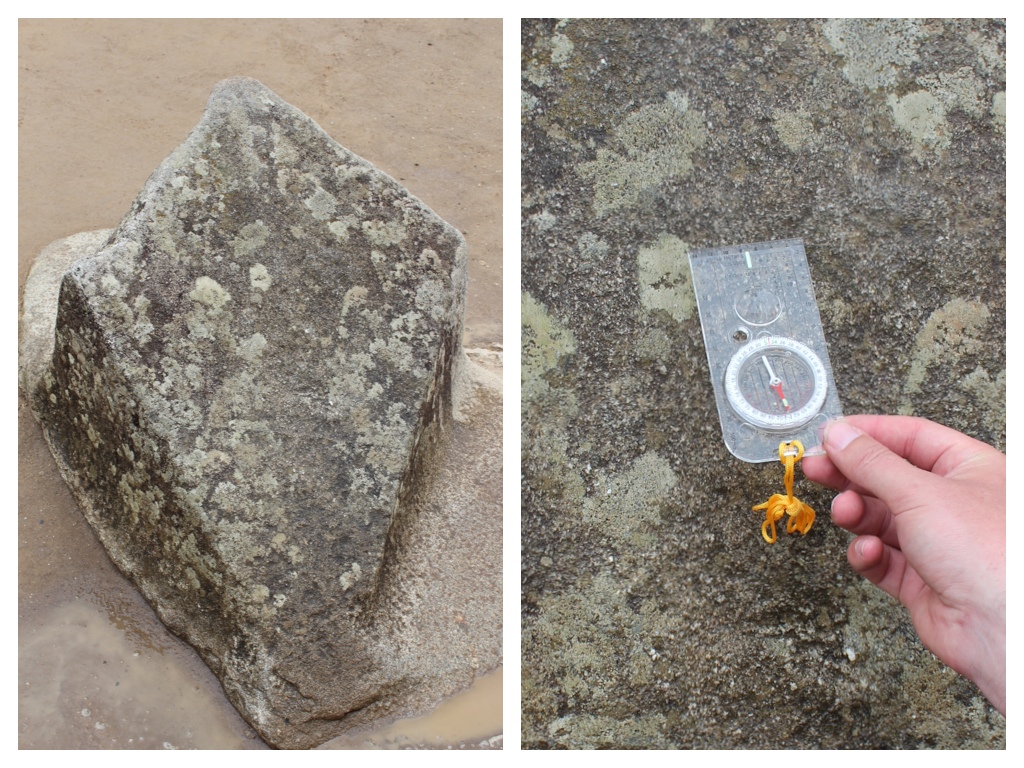
The compass of Machu Picchu
The Intihuatana
The intihuatana of Machu Picchu is located at the top of a pyramidal construction, it is a huge carved rock that has a height of 1 meter by 2 meters in diameter with flat surfaces of 4 sides carved in detail, each of these sides represents a point cardinal that marked the moment in which the solstices and equinoxes probably occurred. This shrine of Machu Picchu can be visit only from 6 to 10 am.
The term Inti Huatana comes from the Quechua language and translated into Spanish means «Place where the Sun is moored», that is, according to the Quechua language and the investigations carried out in the 20th century, the Intihuatana served as an Astronomical Observatory. The latest archaeoastronomical investigations of this nomon have shown that its 13-degree inclination was used to accurately determine the equinox events in Machu Picchu.

Intihuatana or solar observatory
The sacred rock
It is a monolith that reaches three meters in height and sits on a base 7 meters wide. It has two adjacent constructions that were also used in a ritual way. It is a door between the earth and the sky, carved out of a single gigantic piece of rock imitating the shapes of the Yanantin and Pumasillo mountains that rise in the distance.
Intended for the worship of the Apu «Yanantin», the Incas worshiped the mountains, which acted as tutelary gods, (Apus). At present, the Andean man continues with this conception from his ancestors, whose purpose is to live in harmony with Mother Earth (Pachamama), which is why he continues to perform rituals, offering his Apus (tutelary mountains) , your respect and veneration.

Sacred rock
The water mirrors
They are two round-shaped containers, carved in a natural outcrop of granite, similar to grinders, which is why this place is known as: «The Grinders’ Room», they are located on the floor of one of the shrines of Machu Picchu.
As a result of recent investigations, it has been determined that these samples called mortars (grinders) do not have the ideal characteristics to perform such a purpose -a concave base or a smooth surface for grinding- on the contrary, they are containers with a flat and rough base. . Similar to these exist in other places in the Andes called «qochas» or containers for liturgical use; being able to be made of stone, ceramic or wood, which served to contain the water brought from the sacred lakes and rivers in order to make observations of the reflection of the sun, the moon and the stars; functioning in this way as an astronomical mirror of water.
Aware of the energetic influence of the moon on all living beings, these two observatories were used to determine the 8 lunar phases and thus carry out a ceremonial and agricultural calendar necessary for their subsistence.
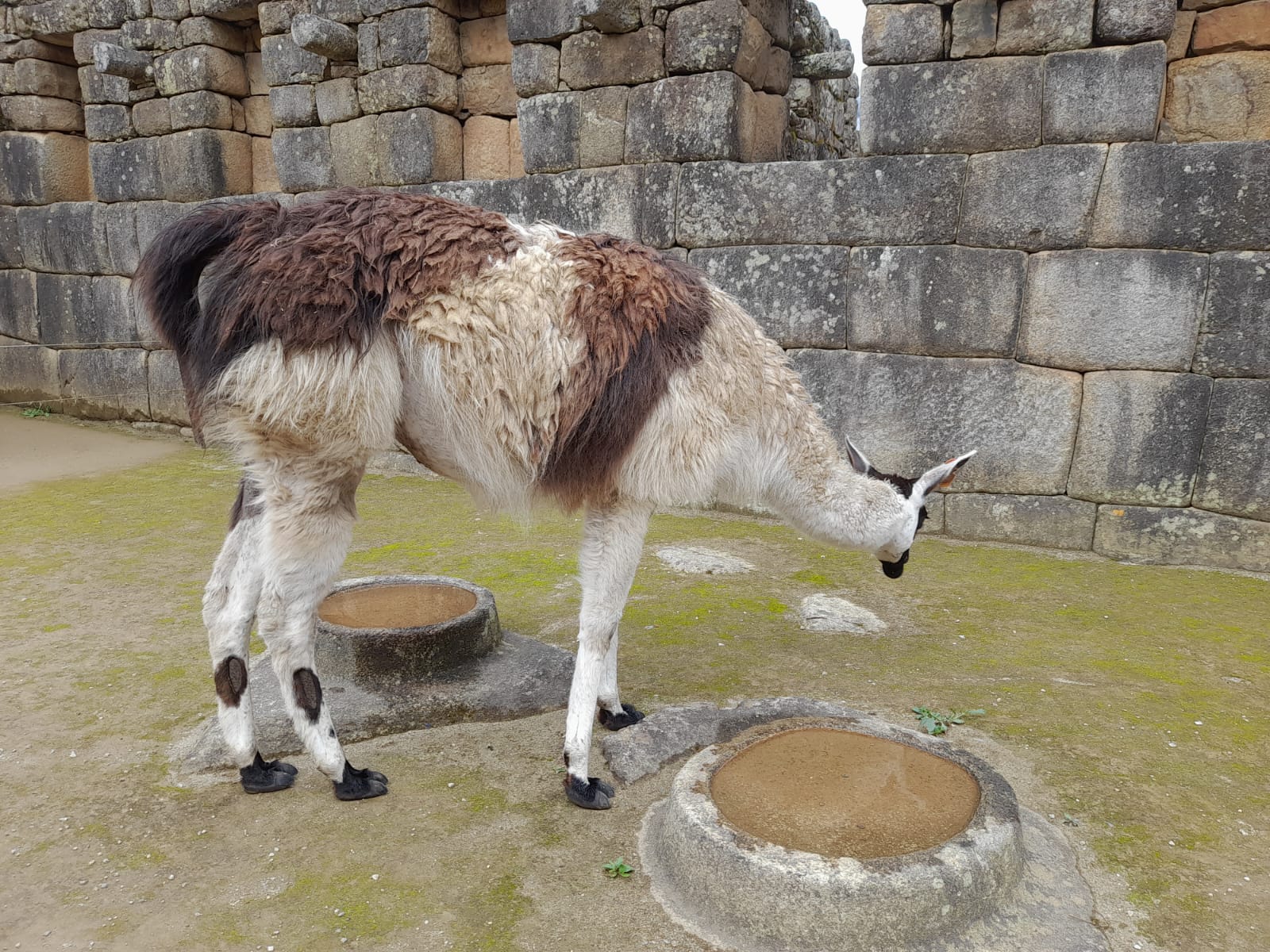
Water mirrow shrine
The temple of the condor
It is an impressive example of Inca masonry integrated into its natural environment. Created from a granite outcrop in the shape of an Andean condor, which is surrounded by two large stones representing its wings.
It was a sacred place built for the purpose of worshiping the «Apu Kuntur» (Condor God). Under the wings of the condor there is a cave, where hundreds of bone remains of Llamas and Alpacas were found. In the upper part of the wings there are large cupboards, which are believed to have been built to house Inca mummies.
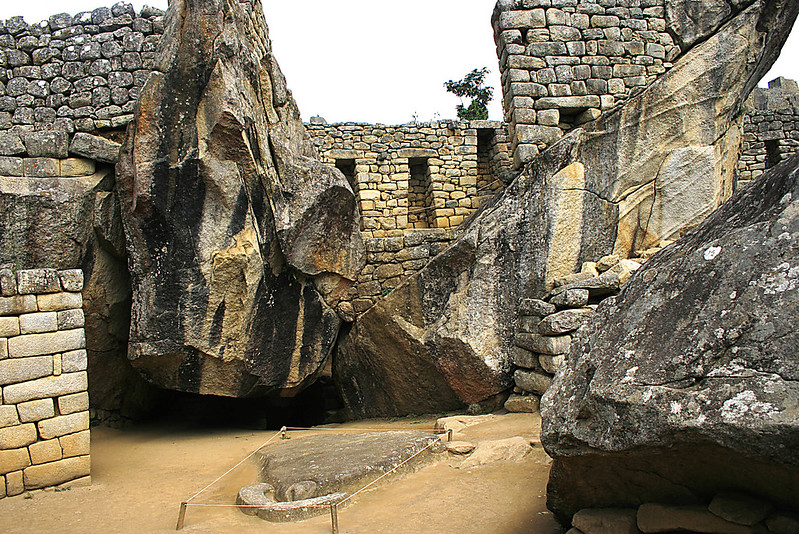
Condor shrine
Shrines of Machu Picchu in circuit 3 (Ticket called, Machu Picchu mountain + circuit 3)
This ticket allows you to ascend to the famous mountain of Machu Picchu (duration of 4 hours round trip). It allows you to take the classic postcard photo of Machu Picchu from the guardian’s house and finally allows you to explore the Inca citadel through circuit 3. Below we detail the shrines of Machu Picchu you will visit on a guided tour through circuit 3.
The funeral rock
It is located in the agricultural sector of the city, it took its name from different hypotheses of the community of experts, who, after multiple discoveries of graves with human remains, baptized it in this way. The rock symbolically represents the entrance to the sacred citadel of Machu Picchu. Its proximity to one of the Machu Picchu cemeteries gave it the character of a sacred place, it is estimated that the area where it is located must have come to host the celebration of a large number of funerary rituals and housed the religious offerings of the city.
The archaeological remains found nearby have been able to explain that the design of the Funeral Rock was made to serve as one of the shrines of the City of Machu Picchu. Well, it presents the common elements of this type of buildings. You can see a series of steps that form a small staircase, as well as the existence of a large ring and a ceremonial altar.
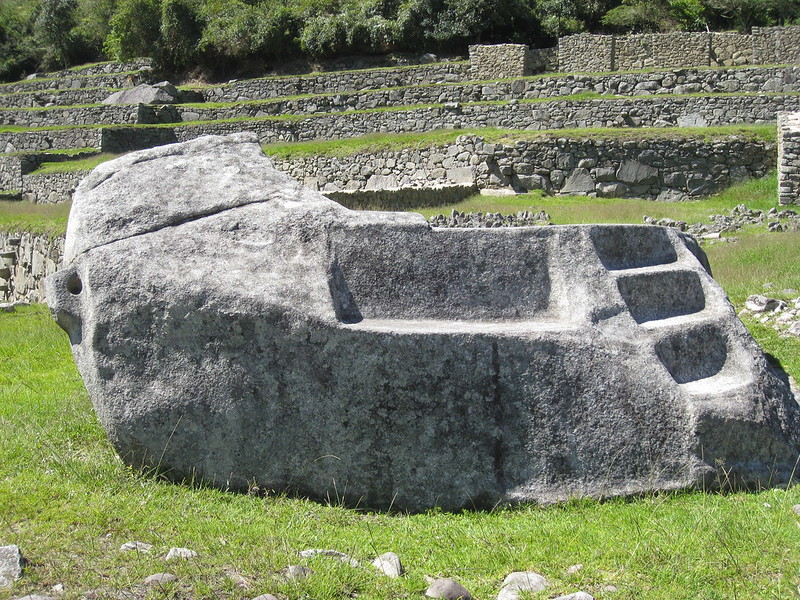
Funeral rock
The temple of the sun in Machu Picchu
It is a circular enclosure built on a natural cave. Due to its high location and its fine carving, it is considered a religious building to worship the sun.
It is the only construction of the Inca city that has a circular shape. It also has windows, niches and an entrance door with the famous Inca technique of perfect fit.
The temple is built with granite blocks that belong to the imperial Inca style. Before the Spanish invasion, it was decorated with gold and silver ornaments. These were looted in subsequent years (there are still cracks that are proof of the decorations that existed inside).
As its name indicates, the Temple of the Sun had the function of paying homage and giving offerings to the sun. This shrine served as an astronomical observatory where the arrival of the solstices and the changes of the seasons could be determined exactly (due to the strategic position of the windows). In the center of the temple there is an altar carved in rock where religious ceremonies in honor of the sun were probably performed. During sunrise at the winter and summer solstices, the two windows located to the east and southeast cast light shadows on the central rock of the temple.
The temple is attached to a huge mountain rock above the natural cave. On the back wall you can see a window with small holes carved into it that probably held precious stones. This window is called ‘The Serpent Window’.
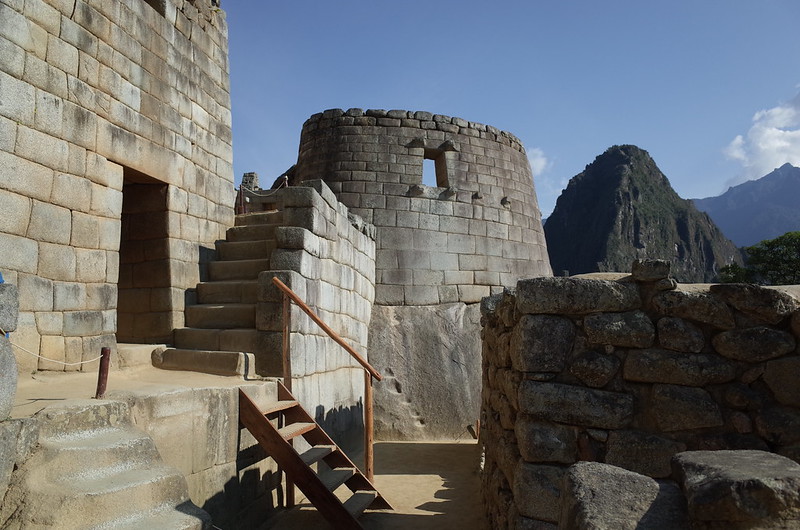
The shrine of the sun
The royal tomb in Machu Picchu
This mausoleum was built to deposit the mummified bodies of the royalty of the Inca empire. Who they were, the emperor, his wife, his children, closest family and chief priests. The royal tomb of Machu Picchu may have housed the mummy of Pachakuteq, the most important emperor of the Inca civilization. The construction of the royal tomb of Machupichu blends harmoniously and symmetrically with the rock that is the foundation of the temple of the sun. This structure is also aligned with the sunrise on the winter solstice.
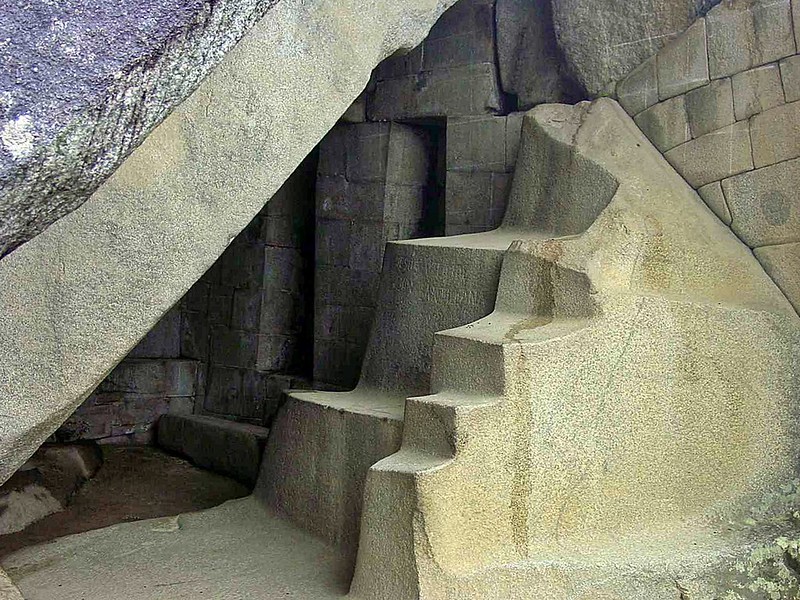
Royal Mausoleum
The door of the sun
This finely made door is adjacent to the main house of the priest and above the temple of the sun and the royal mausoleum. This door with 2 small trunks in the middle of its wall and a stone ring at the top; These details are a clear indication that in this sector there was a bamboo or wooden door. On June 21, the shortest day of the year in Machu Picchu, this door shows a clear alignment with the sunrise.
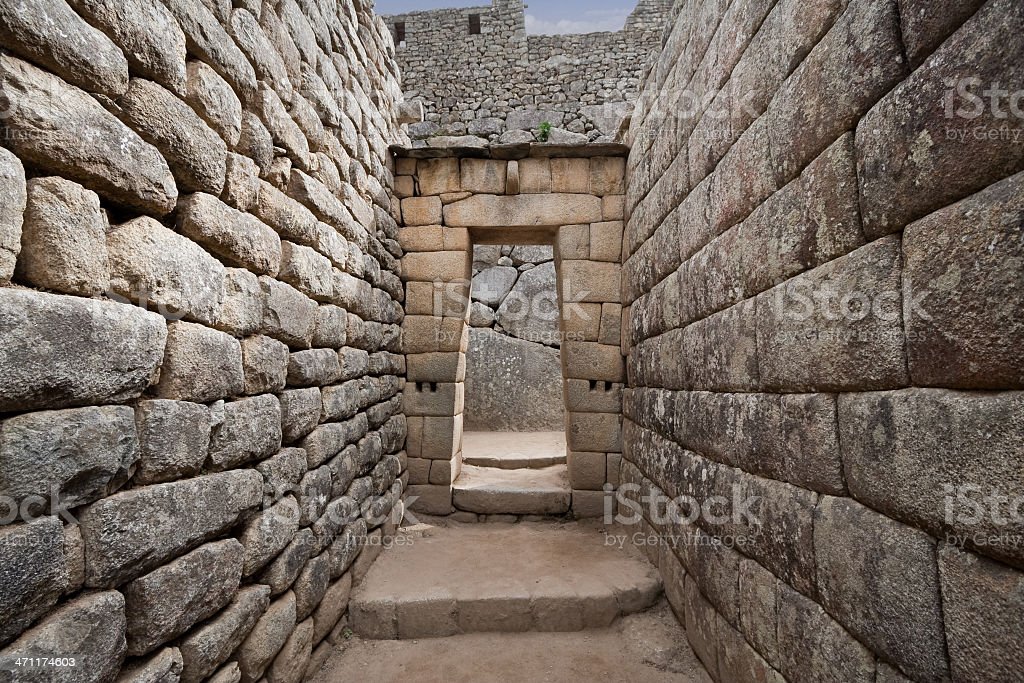
Sacred door
Complementary shrines of Machu Picchu
The shrines of Machu Picchu that are explored in the next section of this circuit are the same ones that are visited in circuit 1 and 2.
- The temple of the 3 sales from the back
- The sacred rock
- The temple of the condor
- The water mirrors
Shrines of Machu Picchu in circuit 4 (Tickets called, Huayna Picchu or Huchuy Picchu + circuit 4 )
The tour of circuit 4 allows you to ascend the mountain of Huayna Picchu or Huchuy Picchu and explore the following shrines of Machu Pícchu.
- The temple of the sun in Machu Picchu
- The royal tomb in Machu Picchu
- The door of the sun
- The temple of the 3 sales from the back
- the sacred rock
- The temple of the condor
- The water mirrors
The wonder of the world, Machu Picchu, has shrines in all sectors of its route, from which we can infer that in Inca times it was an astronomical and philosophical citadel of the Incas. Whichever route you take or which shrines of Machu Picchu you visit, the citadel will be equally impressive and beautiful.

You might also like





Leave A Reply