


The cathedral of Cusco is one of the most representative colonial monuments of Peru. It was built on the old palace of the eighth Inca Wiracocha, between the years 1560 and 1664. This historic monument, considered material heritage of the nation, combines baroque and renaissance architecture.
This construction took more than 100 years to be built, due to problems with its final location, budget and various earthquakes that shook the city of Cusco. A large part of the stones used for the construction of the cathedral basilica of Cusco were brought from majestic Sacsayhuaman.
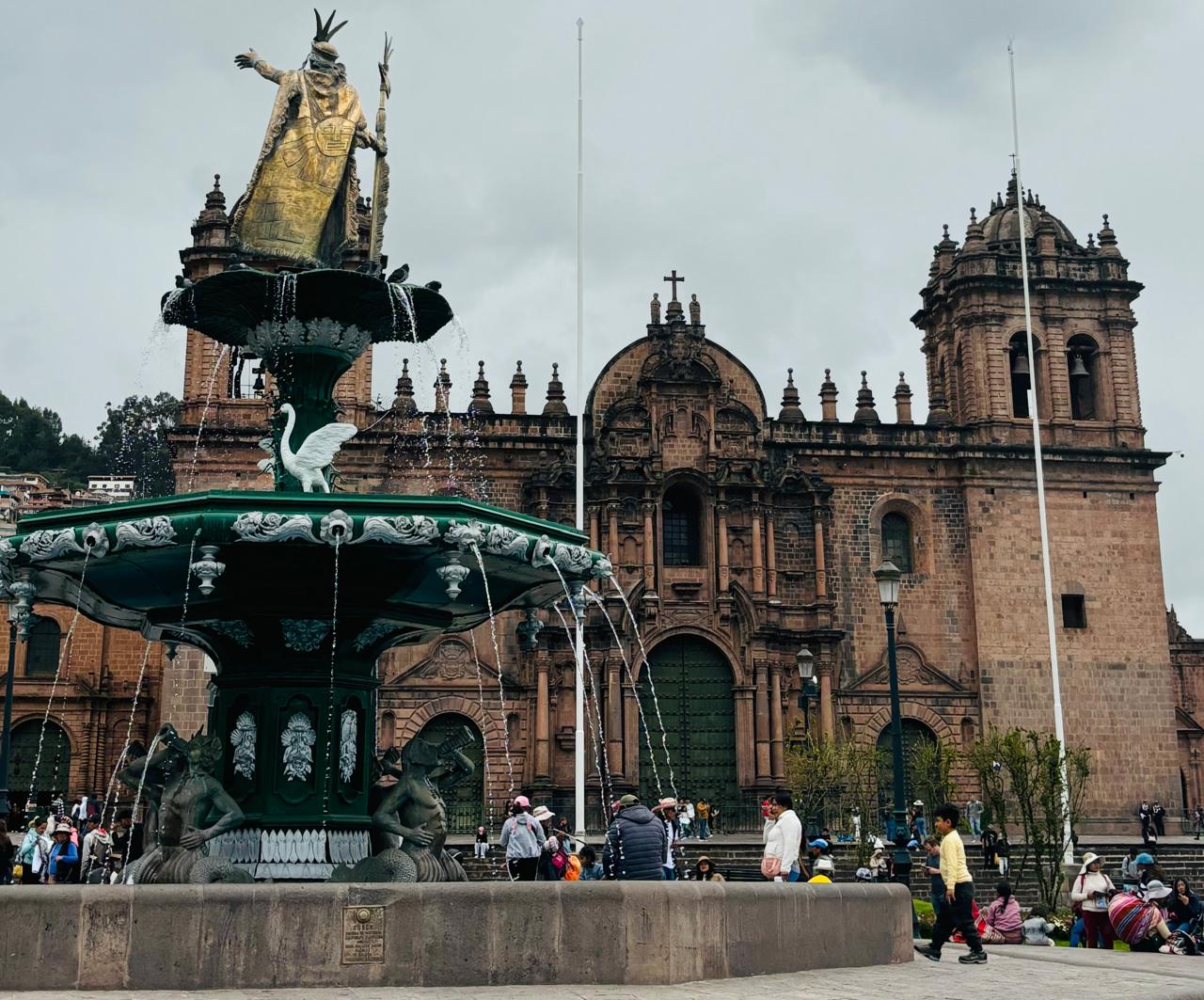
The Cathedral and Manco Capac
Summary
The church
The cathedral of Cusco was built in the shape of a Latin cross and with a façade and interior in the Renaissance style. In its interior chapels there is an extraordinary collection of Baroque style paintings from the famous Cusco school.
Among the most representative canvases of the Cathedral of Cusco are:
- The Last Supper, painted by Marcos Zapata.
- The Nativity of the Virgin of Almudena, painted by Basilio Santa Cruz.
- The Ecstasy of Saint Philip Neri, painted by Basilio Santa Cruz.
- The Nativity of the Virgin of Almudena, painted by Basilio Santa Cruz.
- The 1650 earthquake, painted by Basilio Santa Cruz.
You will see all theses canvases doing the Cusco City Tour
Architecture of the Cathedral of Cusco
Rectangular in shape, like a basilica, the Cathedral of Cusco has three naves: the Epistle nave, the Gospel nave and the central nave, which coincide with the three doors of the façade. It also has fourteen cruciform pillars that define the distribution of the twenty-four entrance vaults and the transept.
The High Altar is made entirely of embossed silver, the Sacristy is made up of forty paintings of the Bishops and Archbishops of Cusco. Next to it are two auxiliary chapels, on the right side the El Triunfo church and on the left the Sagrada Familia.
Learn more about the churches surrounding the Cathedral
The Sagrada Familia: It is a small temple, its construction began in 1723, however it was finished in the period of 1733-1735. It has images of Mary, Joseph and the baby Jesus in arms on its main façade and its main altar is made in the baroque style where the altarpieces and paintings stand out. It was finally finished in 1737.
El Triunfo: Its name is attributed to themes related to the conquest, it was called this way in memory of the final victory of the Spanish against the troops of Manco Inca where they received the miraculous support of the Virgin and the apostle Santiago. Built in 1729 – 1733, its main altar is made of finely carved stone and in its main niche you can see the “Cross of the Conquest” where the ashes of the Inca Garcilaso de la Vega rest.





Leave A Reply