


The food in the Peruvian jungle is one of the most widespread in the entire nation, there is no Peruvian department that at least does not have a restaurant with traditional food from the jungle.
Peruvian gastronomy is fascinating the world for its mixture of exquisite and exotic flavors, aromas and textures, a country with 3 big gastronomic regions: the coast, the Andes and the Peruvian jungle.
Summary
Tacacho con Cecina
This dish is one of the most popular in the Peruvian jungle and is never missing from the San Juan festival held in Iquitos, Yurimaguas, Pucallpa and Tarapoto.
It is prepared based on green plantains that soften when roasted or fried. Then it is crushed and mixed with lard.
These balls of crushed plantain mixed with lard are accompanied with pork jerky (dried and smoked meat) and with chorizos made with the ground meat of the same animal and various seasonings.
The word «tacacho» comes from the Quechua «taka chu» which means «crushed». A food in the Peruvian jungle, with a peculiar preparation.

Tacacho de platano
Juane is the second most popular food in the Peruvian jungle
In the list of typical dishes from the jungle, the Juane must be noted, an original recipe from Moyobamba, capital of the Department of San Martín and the first city founded by the Spanish conquistadors (1540) in the jungle of Peru.
It looks like a small baby wrapped in a blanket of leaves and it is also eaten during the San Juan festivities, hence its name. Although there are several types of juanes, the original is made from cassava. Rice is also very common.
It is made with chicken pieces, hard-boiled eggs and botija olives, ingredients that are wrapped in yucca or rice dough and then boiled in bijao leaves for 30 minutes.
Juane is probably the food in the Peruvian jungle that has become most popular nationwide.
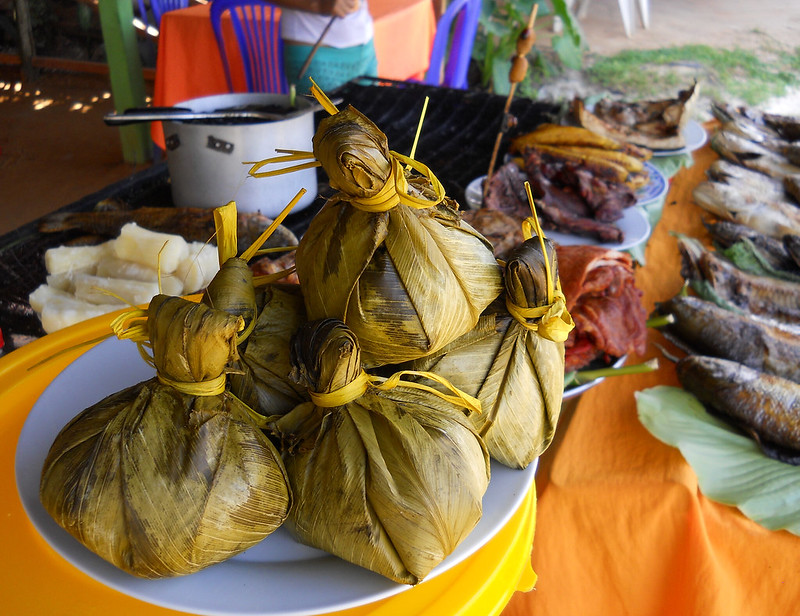
Juane de Arroz
Patarasca
Patarasca is a typical dish from the Peruvian Amazon, which consists of a river fish seasoned with turmeric (called palillo in the region), charapita (wild chili pepper from the Amazon jungle) and sachaculantro (cimarrón cilantro). This fish is roasted and wrapped in bijao leaves.
One of the most used fish is the paiche (arapaima, pirarucú), the second largest freshwater fish in the world, capable of reaching 3 meters in length and weighing more than 250 kilos.
La Patarasca is the food in the Peruvian jungle that is eaten the most on weekends in the jungle. This dish is something like the western barbecue for the indigenous populations of the Peruvian Amazon.

Patarashca
In addition to its exquisite food, the Peruvian Amazon is a region also known for its ancestral Ayahuasca ceremony. If you want to learn more about this healing ritual, follow the following link: Ayahuasca ceremony.
Inchicapi
Thick and delicious Amazonian soup prepared on birthdays, anniversaries and other special occasions. This food in the Peruvian jungle is prepared only with free range hen.
Chicken is a less glamorous option but also very tasty when there are no free-range hens. The word «inchicapi» comes from the Quechua words «inchik» (peanut) and «api» (soup), which results in «peanut soup», since the recipe calls for ground peanuts.

Inchicapi con Mani
Ensalada de Palmito
This food in the Peruvian jungle is typically eaten during Holy Week. Although it is available canned in supermarkets, the tastiest way to consume it is when it is freshly extracted from the palm tree. You only have to wash it 2 or 3 times with water so that it releases its strong smell. Then cut it into pieces and prepare a good salad with avocado, tomato and other ingredients of your choice.
The chonta tree is a palm native to the Amazon that produces one of the most nutritious fruits among plant species. Its heart, called heart of palm, contains 5% protein and is highly appreciated in gastronomy for its delicate flavor. Amazonian Peruvians take advantage of the abundance of the palm tree, especially in the Department of San Martín, to eat Palmito all year round.
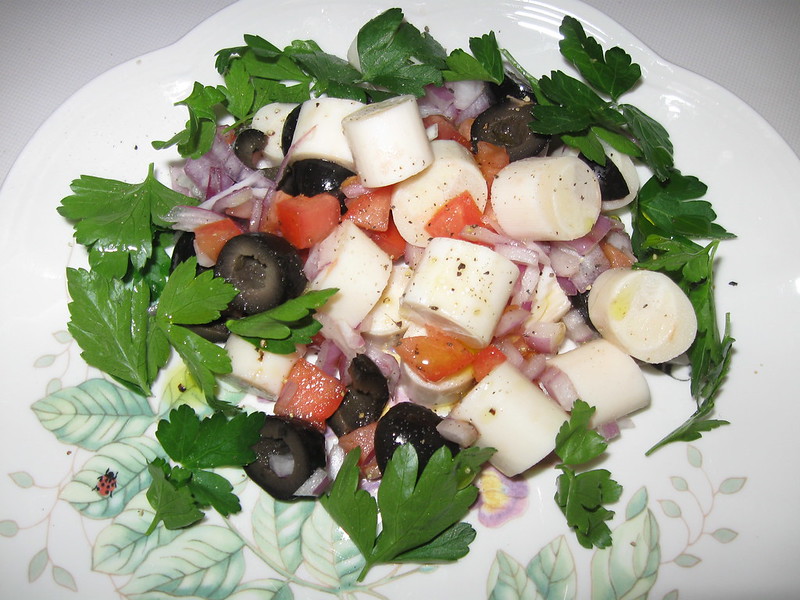
Ensalada de Palmito
Suri skewers
The grasshopper weevil or Suri is a beetle insect considered a pest that lives on the stems of coconut palms and palm trees, however, its larvae are an Amazonian delicacy with which the well-known anticuchos or skewers of Suri are prepared in Iquitos and in other cities of the Peruvian jungle.
This food in the Peruvian jungle is a delicacy with high protein and vitamin value. Its soft texture and flavor resembles that of chicken and it is eaten accompanied by pieces of cassava and parboiled or roasted plantain.

Anticuchos de Suri






Leave A Reply