


Ayahuasca is an Amazonian brew, popularized worldwide in recent years. In the Amazon region, there are 400 indigenous groups that speak 300 different languages and all share a holistic way of relating to nature.
This famous brew is called in various ways in the native peoples, in this article we will describe the most popular and common names.

Camalampi vine
Summary
Ayahuasca and words
The indigenous people of the Colombian and Brazilian Amazon have been taking ayahuasca for generations, but «Ayahuasca» means nothing to them. The word transmitted by the elders in these regions is «yagé and caapi«. A distinction that goes beyond language, but also goes to the core of its tradition.
At first these various distinctions may seem insignificant. However, as UNESCO, an agency within the United Nations, explains, words carry with them entire histories and bodies of knowledge. In the case of ayahuasca, yagé, or the dozens of names used for this brew, these stories are a reflection of the diverse and deeply personal ways in which people around the world engage with the same plant blend.
Ayahuasca retreats and ceremonies
Names of Ayahuasca in different places and autochthonous peoples
The two best-known words are yagé (Colombia, Ecuador and Peru) and ayahuasca (Bolivia, Ecuador and Peru), both words designate both the Banisteriopsis caapi plant and the ritual drink prepared by specialists in Amazonian traditional medicine and the ceremony in the one that is consumed.
- Ayahuasca in Quechua means «rope of the spirits» due to its etymology aya (spirit, dead) and waska (rope, rope), since in the worldview of native peoples ayahuasca is the rope, which allows the spirit to leave the body without it dying. This word is used in Peru, Bolivia and parts of Ecuador.
- Yagé is a Cofán word (it is also found in other sources written as yajé), and is used by indigenous people from the Colombian Amazon and Andes, Ecuadorians, and in Peruvian regions close to the borders of these two countries.
- Caapi or cipó comes from the Ñe’engatú language of the Tupi-Guarani linguistic family, which was the most widespread language on the Brazilian coast and in the Colombian Amazon (Vaupés River) before contact with Europeans, and which continued to be extensively used by the colonizers in the first period of the Portuguese colonization. According to Spruse, caapi translates to yerba or thin leaf. In Brazil this name is used both for the drink and for the B. caapi plant.
- Nishi Cobin in the Shipibo language means «drink of wisdom» or «drink of the wise». This riverside town was traditionally settled on the shores of the Ucayali River and its tributaries. Currently, the Shipibo-Konibo communities are located in the departments of Ucayali, Madre de Dios, Loreto and Huánuco.
- Nixi Pae in the Kaxinawá language means «strong drink» due to its etymology nixi (drink) and pae (strong). The Kaxinawá belong to the Pano linguistic family that inhabits the tropical forest in eastern Peru, from the foot of the Andes to the border with Brazil, in the state of Acre and southern Amazonas, covering the area of Alto Juruá and Purus respectively and the Javari valley.
- Camalampi in Yine means «to see the world through the eyes of the spirits». The Yine people, belonging to the Arawak linguistic family, have occupied the upper part of the Ucayali river basin and the lower part of the Urubamba river since pre-Hispanic times, characterizing themselves as a people of great river navigators and extensive exchange networks that covered the basins of the Ucayali, Manu and Purús rivers
- Uni is a word of the Yaminawa of Brazil. The traditional territory of the Yaminawa has been the region of Alto Purus and Yurua, and their neighboring tributaries and rivers. Their frequent migrations took them to the entire region that includes the border area of Peru, Bolivia and Brazil. Most of the Bolivian Yaminawa are located in the community of Puerto Yaminahua, within the Yaminahua-Machineri TCO. Other Yaminawa reside in Brazil and Peru.
- Natem is the name given by the Achuar and Shuar of Peru and Ecuador.
- Shori is the name given by the Sharanahua of Peru. The Sharanahua are an ethnic group from the Peruvian Amazon that inhabits the banks of the Alto Purús, Curanja, Chandles and Acre rivers in Brazil.
- Hoasca is a word used by the Brazilian religious group Unión del Vegetal, who drink ayahuasca.
- Daime term given by the Brazilian religious group Santo Daime doctrine founded by Raimundo Irineu Serra.
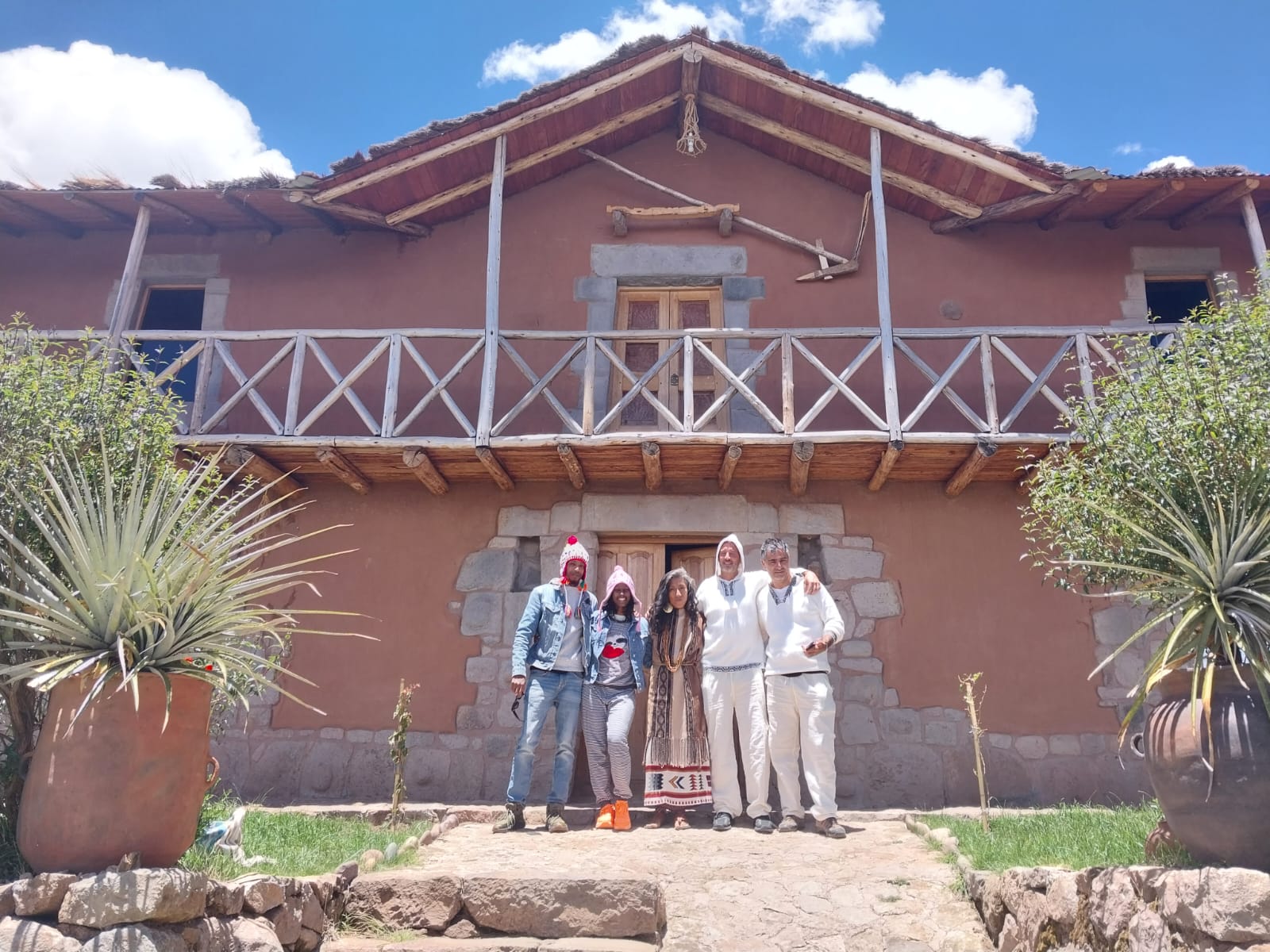
Ayahuasca retreat
The importance of words
The importance of respecting the various practices and words for ayahuasca was a central theme at the World Ayahuasca Conference held in 2019. There, various participants explored how they can communicate their differences and commonalities to form alliances that support the protection of this cultural treasure in all its diversity.
Intangible heritage in Peru
In the context of its traditional use, and protecting it under art. 2 of the Convention for the Safeguarding of the Intangible Cultural Heritage of UNESCO, on June 24, 2008 the Peruvian government declared the traditional use of ayahuasca Cultural Heritage of the Nation through National Directorial Resolution No. 836/INC:
RESOLVED: Declare the Nation’s Cultural Heritage of the traditional knowledge and uses of Ayahuasca practiced by native Amazonian communities, as a guarantee of cultural continuity.
The measure was taken after the request of the indigenous communities after a documentation work entrusted to the researcher Rosa Giove Nakazawa. Other countries, such as Brazil, Ecuador and Bolivia, are carrying out procedures to grant it the same recognition.





Leave A Reply